
Loading
 ← Back to blogs
Learn what backlinks are, why they matter for SEO, the different types of backlinks, and ethical link-building strategies to improve your Google rankings.
Backlinks are links from one website to another. They are also known as inbound links or incoming links. When another website links to a page on your website, Google considers it a signal that your content may be valuable and trustworthy.
For example, if a popular technology blog links to your SEO article, that link is a backlink for your website.
Backlinks are one of the most important ranking factors in Search Engine Optimization (SEO). High-quality backlinks can improve your website's authority, increase organic traffic, and help your pages rank higher in search engine results.
Search engines use backlinks to understand the popularity and credibility of a website. When multiple trusted websites link to your content, it signals that your information is useful and reliable.
Benefits of backlinks include:
Backlinks are often described as "votes of confidence" from other websites.
Imagine you write a helpful article about SEO. Another website finds your content valuable and adds a link to your article in one of their blog posts.
When users click that link, they visit your website. At the same time, search engines recognize that another website has recommended your content.
The more high-quality and relevant backlinks you earn, the stronger your website's authority can become.
DoFollow backlinks pass SEO value (often called "link equity") from one website to another.
These are the most valuable backlinks because they can positively influence search rankings.
Example:
A respected marketing blog links to your article about keyword research.
NoFollow backlinks include an attribute that tells search engines not to pass ranking signals in the usual way.
Although they may not contribute as directly to rankings, they can still:
Examples include many links found in blog comments and some social media platforms.
Editorial backlinks are earned naturally when other websites reference your content because it is informative and useful.
These are among the highest-quality backlinks because they are not requested or purchased.
Guest posting involves writing articles for another website and including a relevant link back to your own website where appropriate.
This can help you:
Always prioritize high-quality websites and valuable content.
Many businesses submit their details to reputable online directories.
Examples include:
Ensure your business information is accurate and consistent across all listings.
Some websites allow you to create a profile with a website link.
Examples include:
These links can contribute to your overall online presence.
Links shared on social media may not always pass ranking signals, but they can:
Not all backlinks have the same value.
Characteristics include:
Example:
A respected SEO blog linking to your Technical SEO guide.
Examples include:
Low-quality backlinks can harm your website's reputation and should be avoided.
Google considers several factors when evaluating backlinks:
Is the linking website related to your topic?
Is the linking website trusted?
Is the link naturally included within useful content?
Does the clickable text accurately describe the linked page?
Do backlinks come from different websites rather than one source?
A natural and diverse backlink profile is generally stronger than relying on links from only a few websites.
Anchor text is the clickable text used in a hyperlink.
Examples:
Good anchor text helps users understand what to expect before clicking the link.
Avoid using the same keyword-rich anchor text repeatedly, as natural variation is generally recommended.
The best way to earn backlinks is by publishing useful content that people want to reference.
Examples include:
Great content naturally attracts links over time.
Contribute high-quality articles to relevant websites in your industry.
Focus on providing value rather than simply gaining links.
Unique data and research are often cited by other websites.
Examples:
Original content increases the likelihood of earning editorial backlinks.
Examples include:
Useful resources often attract backlinks because they solve real problems.
Networking with bloggers, publishers, and industry experts can lead to natural collaboration and content mentions.
Professional relationships often create opportunities for quality backlinks.
For local businesses, reputable business directories and industry listings can strengthen your online presence and support Local SEO.
Avoid these practices:
Focus on earning links through quality content and ethical SEO practices.
Many beginners confuse these two concepts.
Links connecting pages within your own website.
Example:
A blog about Technical SEO linking to your article on Website Speed Optimization.
Benefits:
Links coming from other websites to your website.
Benefits:
Both internal links and backlinks are important components of a successful SEO strategy.
Several tools can help you monitor your backlink profile:
These tools show:
Monitoring backlinks helps you understand your website's authority and identify opportunities for improvement.
✔ Create high-quality content
✔ Publish original research
✔ Write guest articles
✔ Build industry relationships
✔ Earn editorial mentions
✔ List your business in trusted directories
✔ Monitor backlinks regularly
✔ Remove or disavow harmful links when necessary
✔ Build links naturally over time
✔ Focus on relevance instead of quantity
To build a strong backlink profile:
Sustainable link building is more effective than trying to gain many links quickly.
A backlink is a link from another website that points to your website. It helps search engines evaluate the authority and relevance of your content.
Yes. Backlinks remain one of the key factors search engines use to assess website authority and relevance.
There is no fixed number. A few high-quality, relevant backlinks are generally more valuable than many low-quality ones.
Yes. Links from spammy or low-quality websites can negatively affect your website if they form a significant part of your backlink profile.
Backlinks come from other websites, while internal links connect pages within your own website.
Backlinks are an essential part of a successful SEO strategy because they help search engines understand the credibility and authority of your website. Rather than focusing on the number of backlinks, prioritize earning high-quality links from relevant and trustworthy websites.
By creating valuable content, building professional relationships, contributing guest articles, and maintaining ethical SEO practices, you can develop a strong backlink profile that supports long-term organic growth.
Remember that effective link building takes time, but consistent effort can lead to better search rankings, increased website traffic, and stronger online authority.

Learn what Digital Marketing is, its types, benefits, career opportunities, AI trends, and why it's one of the most in-demand skills for students and professionals in 2026.

Discover the benefits of learning Digital Marketing after college, explore career opportunities, essential skills, freelancing, and how to build a successful Digital Marketing Career.
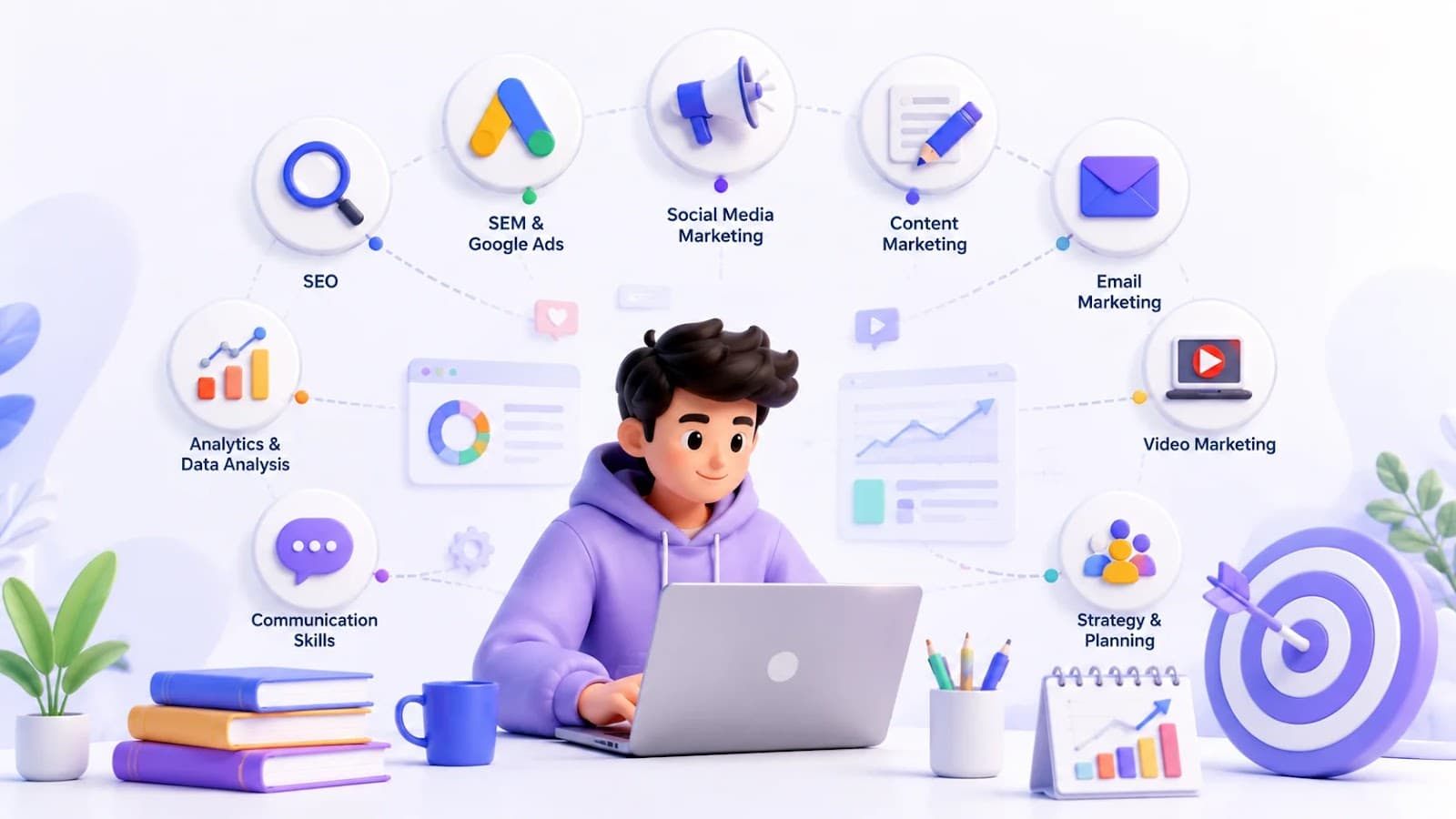
Explore the top 10 Digital Marketing Skills every student should master, from SEO and Google Ads to AI tools, to build a successful Marketing Skills portfolio and career.