
Loading
 ← Back to blogs
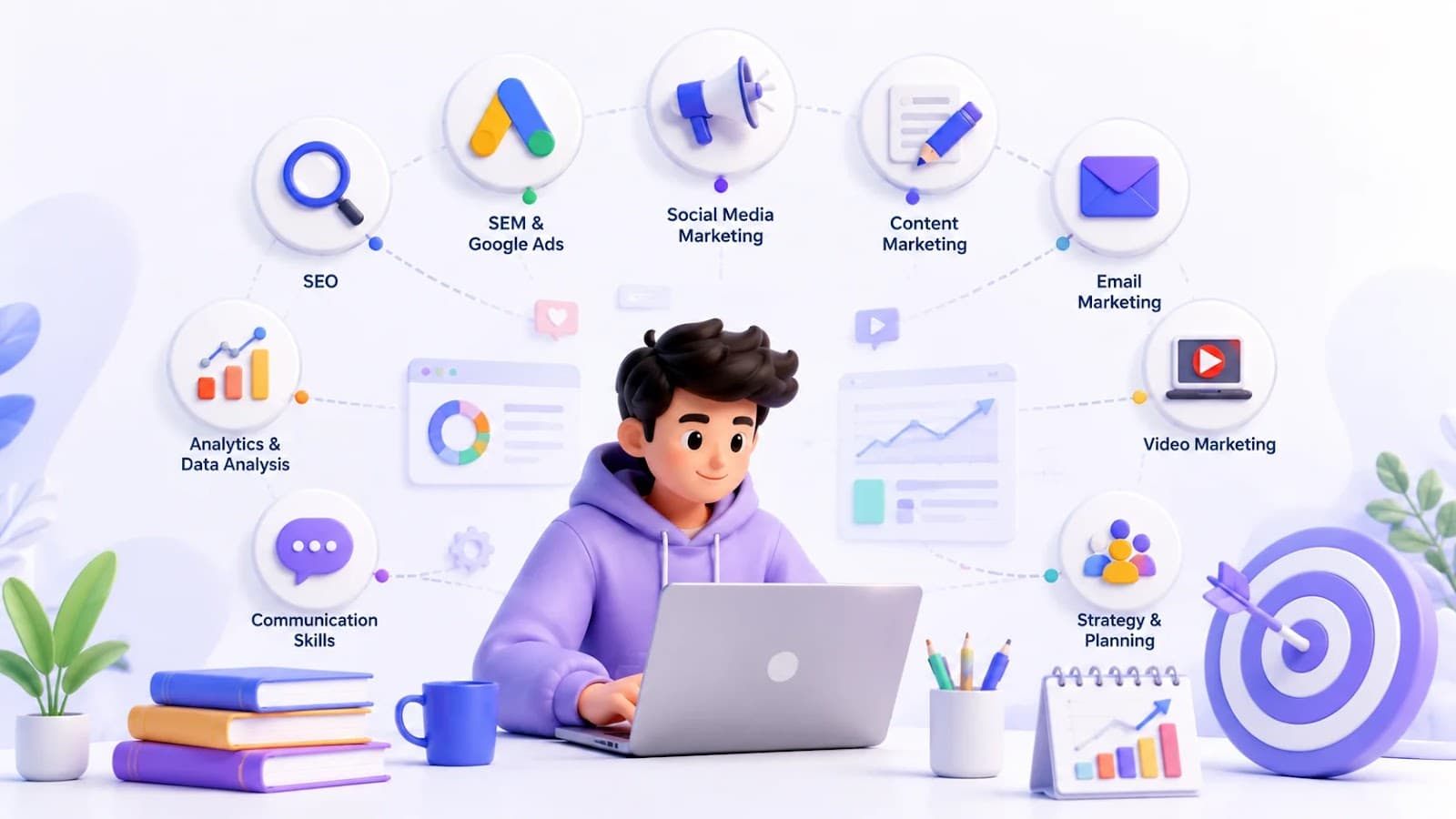
Explore the top 10 Digital Marketing Skills every student should master, from SEO and Google Ads to AI tools, to build a successful Marketing Skills portfolio and career.
The digital world is creating exciting career opportunities for students across every industry. Whether you want to work for a leading company, become a freelancer, or start your own business, developing the right Digital Marketing Skills can give you a significant competitive advantage.
Today's employers don't just look for degrees—they value practical skills that can deliver real business results. Learning modern Marketing Skills helps students become industry-ready and prepares them for a rapidly evolving job market.
In this guide, we'll explore the top 10 digital marketing skills every student should learn to build a successful career in 2026 and beyond.
Businesses of all sizes are investing in digital marketing to attract customers, increase sales, and strengthen their online presence. As a result, companies need professionals who understand how digital platforms, advertising, content, and analytics work together.
Learning digital marketing helps students:
The earlier students begin learning these skills, the greater their career opportunities after graduation.
Search Engine Optimization (SEO) is one of the most valuable Digital Marketing Skills students can learn.
SEO involves improving a website so it appears higher in search engine results like Google. Higher rankings lead to increased website traffic without paying for advertisements.
Key SEO topics include:
SEO is a long-term skill that remains in demand across industries.
Content is the foundation of digital marketing.
Businesses attract and educate customers through valuable content such as:
Students who can create informative and engaging content become valuable assets for any organization.
Almost every business actively uses social media to connect with customers.
Students should learn how to market brands on platforms like:
Important skills include:
Effective social media marketing helps businesses build trust and generate leads.
Google Ads allows businesses to reach potential customers instantly through paid advertising.
Students should understand:
Learning Google Ads provides practical advertising experience that employers highly value.
Meta Ads (Facebook and Instagram Ads) are essential for modern businesses.
Students should learn how to:
Meta advertising remains one of the most effective ways to generate leads and sales.
Email marketing continues to deliver one of the highest returns on investment among digital marketing channels.
Students should understand:
Personalized email campaigns help businesses maintain long-term customer relationships.
Successful marketers rely on data to make informed decisions.
Google Analytics 4 helps marketers measure:
Understanding analytics enables students to improve campaigns using real data instead of assumptions.
Artificial Intelligence has become an essential part of digital marketing.
Popular AI tools include:
AI helps students:
Students who combine AI with human creativity gain a significant competitive advantage.
Copywriting is the skill of writing persuasive content that encourages people to take action.
Students should learn how to write:
Strong copywriting improves engagement, conversions, and customer trust.
Learning individual tools is important, but understanding overall marketing strategy is what makes a great digital marketer.
Students should know how to:
Strategic thinking allows marketers to connect different digital channels into successful campaigns.
Beyond technical knowledge, students should also develop essential professional Marketing Skills, including:
These skills help students perform effectively in both corporate and freelance environments.
Students can develop digital marketing expertise by:
Practical experience is just as important as theoretical knowledge.
Mastering these Digital Marketing Skills opens the door to various career opportunities, including:
Students can also choose freelancing, consulting, or entrepreneurship based on their career goals.
The future of digital marketing is driven by innovation and technology.
Emerging trends include:
Students who continuously upgrade their Marketing Skills will remain highly valuable in the evolving digital landscape.
Students should begin with SEO, content marketing, and social media marketing before progressing to paid advertising, analytics, and advanced marketing strategies.
Yes. Students from engineering, commerce, arts, science, management, and other academic backgrounds can benefit from learning digital marketing.
No. Most digital marketing roles do not require programming knowledge. Many tools are beginner-friendly and designed for non-technical users.
The basics can be learned within a few weeks, while mastering advanced skills requires several months of practical learning and hands-on experience.
Yes. Students can offer services such as SEO, social media management, content writing, Google Ads management, and email marketing to businesses and clients worldwide.
Developing strong Digital Marketing Skills is one of the smartest investments students can make for their future. From SEO and content marketing to AI tools, analytics, and advertising, these skills prepare students for high-demand careers in today's digital economy.
The most successful marketers combine technical expertise with creativity, communication, and strategic thinking. By continuously improving your Marketing Skills, practicing on real projects, and staying updated with industry trends, you can build a successful career, grow your own business, or work with leading companies around the world.
Learn what Digital Marketing is, its types, benefits, career opportunities, AI trends, and why it's one of the most in-demand skills for students and professionals in 2026.
Discover the benefits of learning Digital Marketing after college, explore career opportunities, essential skills, freelancing, and how to build a successful Digital Marketing Career.
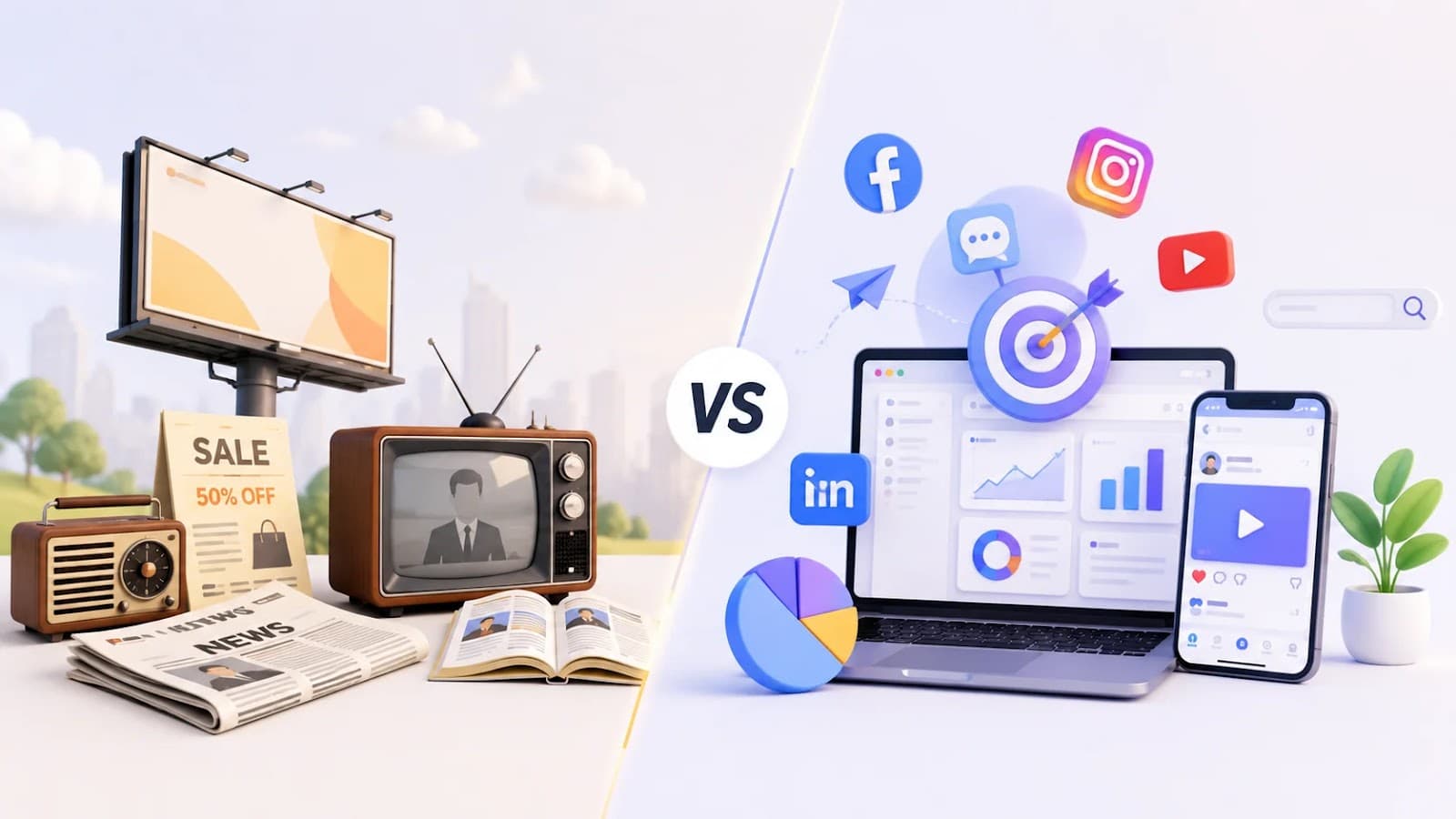
Compare Traditional Marketing and Digital Marketing to understand their differences, advantages, limitations, and which strategy is best for business growth in today's digital world.