
Loading
 ← Back to blogs
Learn Voice Search SEO with proven strategies, conversational keywords, Local SEO, FAQs, and mobile optimization to improve search visibility in 2026.
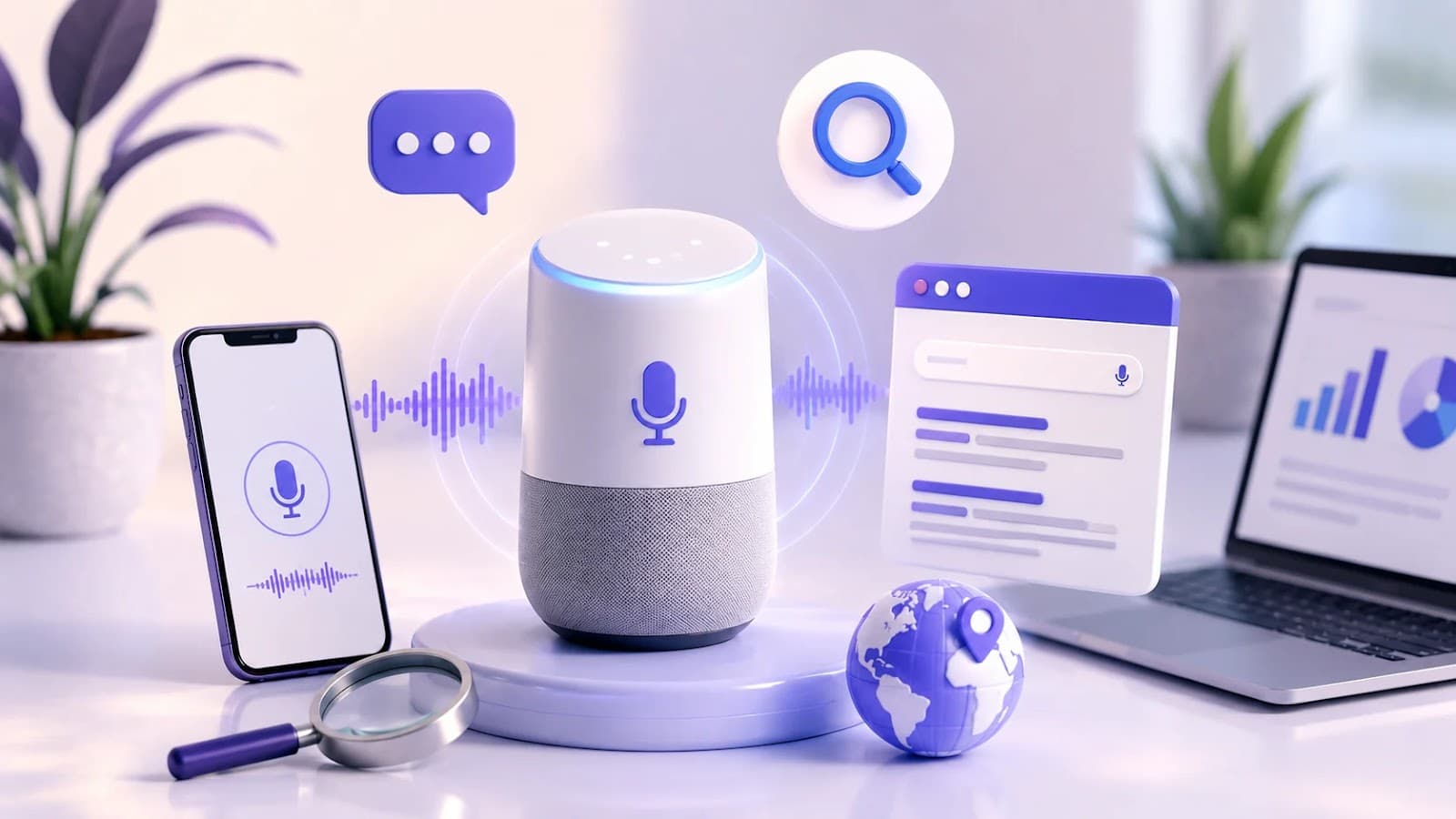
Voice search has changed the way people find information online. Instead of typing short keywords into search engines, users now ask complete questions using voice assistants such as Google Assistant, Siri, Alexa, and other AI-powered devices.
For example, instead of typing:
"best SEO course"
A user might say:
"What is the best SEO course for beginners near me?"
Because voice searches are more conversational, optimizing your website for voice search requires a different SEO approach than traditional keyword optimization.
In this guide, you'll learn what Voice Search SEO is, why it's important, and the best strategies to optimize your website for voice search in 2026.
Voice Search SEO is the process of optimizing your website so it appears in search results when users perform voice searches using smartphones, smart speakers, and voice assistants.
Voice Search SEO focuses on:
The goal is to make your content easy for search engines to understand and easy for voice assistants to present as answers.
Voice search continues to grow because it is:
People commonly use voice search while:
Optimizing for voice search helps you reach users in these everyday situations.
When someone asks a question using a voice assistant, the system:
Search engines prioritize content that is clear, trustworthy, and directly answers the user's question.
Optimizing for voice search can help you:
Voice search optimization complements your overall SEO strategy.
Voice searches sound like natural conversations.
Instead of targeting:
Target phrases like:
Think about how people naturally ask questions.
Voice searches are usually longer than typed searches.
Examples:
Typed Search:
Voice Search:
Long-tail keywords often have lower competition and better match voice search queries.
Many voice searches begin with:
Examples:
Include these questions as headings in your content and answer them clearly.
Voice assistants often read answers from featured snippets.
To improve your chances:
Featured snippets increase visibility in both text and voice search.
Many voice searches are location-based.
Examples:
Improve Local SEO by:
Local optimization increases your chances of appearing in voice search results.
Most voice searches happen on smartphones.
Ensure your website:
A good mobile experience supports both voice search and traditional SEO.
Fast websites provide better user experiences and are more likely to perform well in search.
Ways to improve speed:
Page speed remains an important part of SEO.
Frequently Asked Questions are ideal for voice search because they mirror how users ask questions.
Example:
Voice Search SEO is the process of optimizing your website so it appears in search results for spoken queries.
FAQs also improve readability and may increase eligibility for enhanced search results.
Schema Markup helps search engines better understand your content.
Useful schema types include:
Structured data can improve how your content is interpreted and displayed in search.
Voice assistants prefer content that is:
Avoid overly complex language when explaining concepts.
Understand what users want when they ask questions.
Examples:
Informational:
Commercial:
Transactional:
Match your content to the user's intent.
Connect related articles naturally.
Example:
A Voice Search SEO guide can link to:
Internal links help users explore related topics and help search engines understand your content.
Google rewards content that is:
Focus on answering real user questions with practical, trustworthy information.
If you operate a local business:
A complete profile supports visibility in local voice searches.
Avoid these common mistakes:
Correcting these issues improves your chances of appearing in voice search results.
✔ Use conversational keywords
✔ Target long-tail keywords
✔ Answer common questions
✔ Add FAQ sections
✔ Improve Local SEO
✔ Optimize Google Business Profile
✔ Improve website speed
✔ Make your website mobile-friendly
✔ Add structured data
✔ Write naturally
✔ Build internal links
✔ Publish helpful content
✔ Update content regularly
✔ Monitor search performance
These tools can support your voice search optimization efforts:
These tools help identify conversational search opportunities and monitor website performance.
Voice Search SEO | Traditional SEO |
Focuses on conversational queries | Focuses on typed keywords |
Uses question-based content | Uses keyword-focused content |
Prioritizes natural language | Often targets shorter phrases |
Strong emphasis on Local SEO | Broader search optimization |
Frequently targets featured snippets | Focuses on standard search rankings |
Both approaches complement each other and should be part of a comprehensive SEO strategy.
Voice Search SEO is the practice of optimizing your website so it performs well when users search using spoken queries through voice assistants.
Voice searches are typically longer, more conversational, and often phrased as complete questions.
Yes. Many voice searches are location-based, making Local SEO especially important for businesses serving specific areas.
Yes. Voice assistants often use featured snippets to answer user questions, making them valuable for voice search visibility.
Focus on natural language, question-based content, fast website performance, mobile optimization, Local SEO, and clear answers to common user questions.
Voice Search SEO is becoming an increasingly important part of modern search optimization as more users rely on voice assistants to find information, products, and services. By creating conversational, question-focused content and maintaining a fast, mobile-friendly website, you can improve your chances of appearing in voice search results.
Remember that voice search optimization is not separate from traditional SEO—it builds on the same fundamentals of helpful content, technical performance, and user experience. As search technology continues to evolve, websites that prioritize clarity, relevance, and accessibility will be well positioned for long-term success.

Learn what Digital Marketing is, its types, benefits, career opportunities, AI trends, and why it's one of the most in-demand skills for students and professionals in 2026.

Discover the benefits of learning Digital Marketing after college, explore career opportunities, essential skills, freelancing, and how to build a successful Digital Marketing Career.
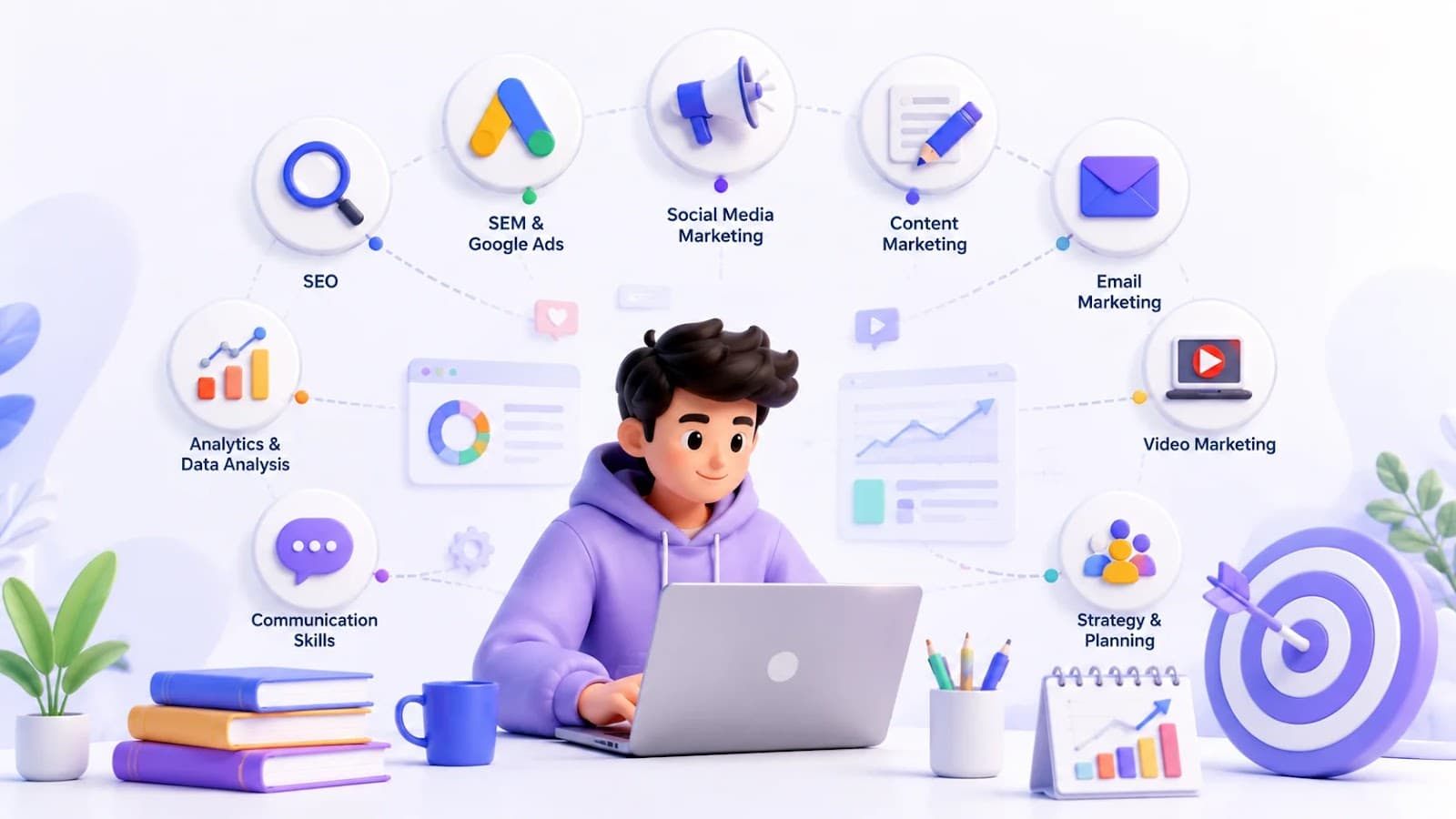
Explore the top 10 Digital Marketing Skills every student should master, from SEO and Google Ads to AI tools, to build a successful Marketing Skills portfolio and career.