Loading
 ← Back to blogs
Compare Traditional Marketing and Digital Marketing to understand their differences, advantages, limitations, and which strategy is best for business growth in today's digital world.
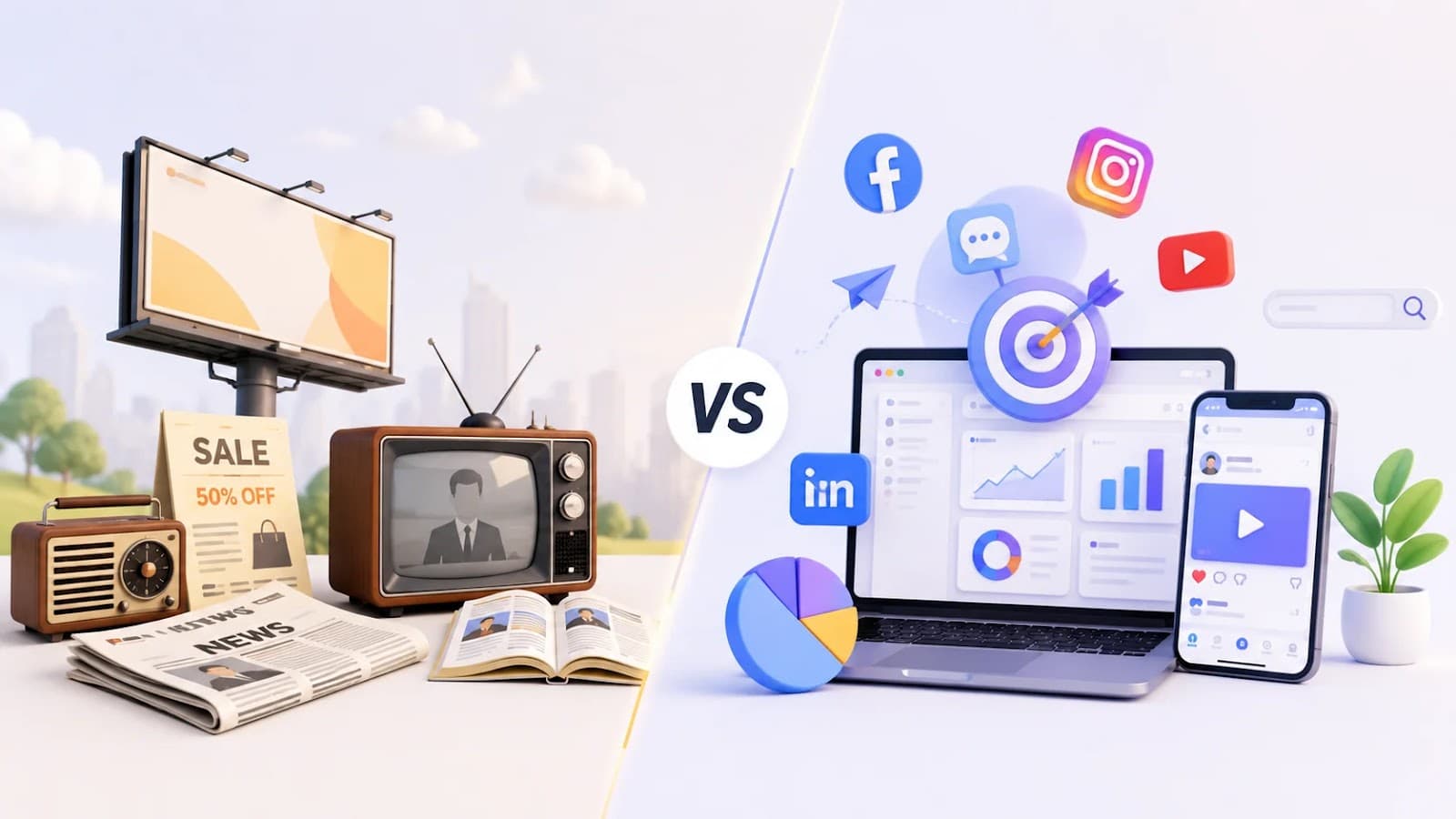
Marketing has always been an essential part of business growth. For decades, companies relied on newspapers, television, radio, billboards, and magazines to promote their products and services. While these methods are still used today, the rise of the internet has transformed how businesses connect with customers.
Today, Digital Marketing has become the preferred choice for businesses because it offers better targeting, measurable results, and greater flexibility. However, Traditional Marketing continues to play an important role in specific industries and local markets.
In this guide, we'll compare traditional marketing and digital marketing, explore their advantages and limitations, and help you understand which approach is best for modern businesses.
Traditional Marketing refers to promoting products and services using offline channels that have been used for decades.
Common traditional marketing channels include:
Traditional marketing mainly focuses on reaching a broad audience through physical or broadcast media.
Digital Marketing is the process of promoting products, services, or brands using online platforms and digital technologies.
Popular digital marketing channels include:
Unlike traditional marketing, digital marketing allows businesses to interact directly with customers while measuring campaign performance in real time.
Traditional marketing usually targets audiences within a specific geographic area.
For example:
Its reach is often limited by location and distribution.
Digital marketing allows businesses to reach customers across cities, countries, or even globally through online platforms.
A small business can attract customers worldwide using a website, SEO, and social media.
Advertising through television, newspapers, or billboards often requires a significant budget.
Small businesses may find these marketing methods expensive.
Digital marketing offers flexible budgeting.
Businesses can start with small investments and gradually increase spending as campaigns perform well.
This makes it suitable for startups and small businesses.
Traditional advertisements are shown to a broad audience, regardless of whether everyone is interested in the product.
Audience targeting options are limited.
Digital marketing provides highly accurate targeting based on:
This helps businesses reach the right customers more effectively.
Measuring the success of traditional campaigns can be difficult.
Businesses often rely on estimates and surveys.
Digital marketing provides real-time analytics that show:
This allows marketers to improve campaigns quickly.
Communication is usually one-way.
Customers see advertisements but have limited opportunities to respond immediately.
Digital platforms encourage two-way communication.
Customers can:
This helps businesses build stronger customer relationships.
Launching newspaper or television advertisements often requires planning, printing, and scheduling.
Changes can take several days or weeks.
Digital campaigns can be created, edited, and launched within minutes.
Businesses can pause or optimize campaigns anytime based on performance.
Calculating ROI is often difficult because businesses cannot accurately track every customer interaction.
Digital marketing offers measurable ROI through analytics platforms.
Businesses know exactly how much they spend and how many leads or sales each campaign generates.
Once advertisements are printed or broadcast, making changes can be costly and time-consuming.
Digital campaigns can be updated instantly.
Businesses can:
Traditional marketing still provides several benefits:
Many large brands continue using traditional marketing alongside digital strategies.
Digital marketing offers numerous advantages, including:
These advantages make digital marketing the preferred choice for most modern businesses.
Yes.
The most successful businesses often combine Traditional Marketing and Digital Marketing to maximize their results.
For example:
A retail store might:
Using multiple marketing channels creates a stronger and more consistent brand presence.
The answer depends on your business goals.
Choose Traditional Marketing if you want to:
Choose Digital Marketing if you want to:
For most businesses in 2026, digital marketing offers greater flexibility, measurable results, and long-term growth opportunities.
If you're planning to build a career in digital marketing, focus on developing these skills:
These skills are highly valued across industries and can open doors to exciting career opportunities.
Marketing continues to evolve with technology.
Emerging trends include:
Businesses that combine innovation with customer-focused strategies will remain competitive in the digital era.
Traditional Marketing uses offline channels such as television, newspapers, and billboards, while Digital Marketing uses online platforms like search engines, websites, social media, email, and online advertising.
Digital marketing offers better audience targeting, measurable results, lower costs, and global reach. However, traditional marketing can still be effective for local promotions and brand awareness.
Yes. Digital marketing is ideal for small businesses because campaigns can start with a small budget and scale as the business grows.
Yes. Many businesses still use traditional marketing for local advertising, print campaigns, and offline promotions. It works best when combined with digital marketing strategies.
Digital marketing skills such as SEO, Google Ads, content marketing, social media marketing, and analytics are among the most in-demand skills in today's job market.
Both Traditional Marketing and Digital Marketing have unique strengths, and the right choice depends on your business goals, audience, and budget. Traditional marketing remains valuable for local outreach and brand recognition, while digital marketing offers unmatched flexibility, precise targeting, real-time insights, and measurable results.
As businesses continue to embrace digital transformation, learning Digital Marketing has become an essential skill for students, entrepreneurs, and professionals. Understanding how both approaches work—and when to use them—will help you create effective marketing strategies and stay ahead in an increasingly competitive marketplace.
Learn what Digital Marketing is, its types, benefits, career opportunities, AI trends, and why it's one of the most in-demand skills for students and professionals in 2026.
Discover the benefits of learning Digital Marketing after college, explore career opportunities, essential skills, freelancing, and how to build a successful Digital Marketing Career.
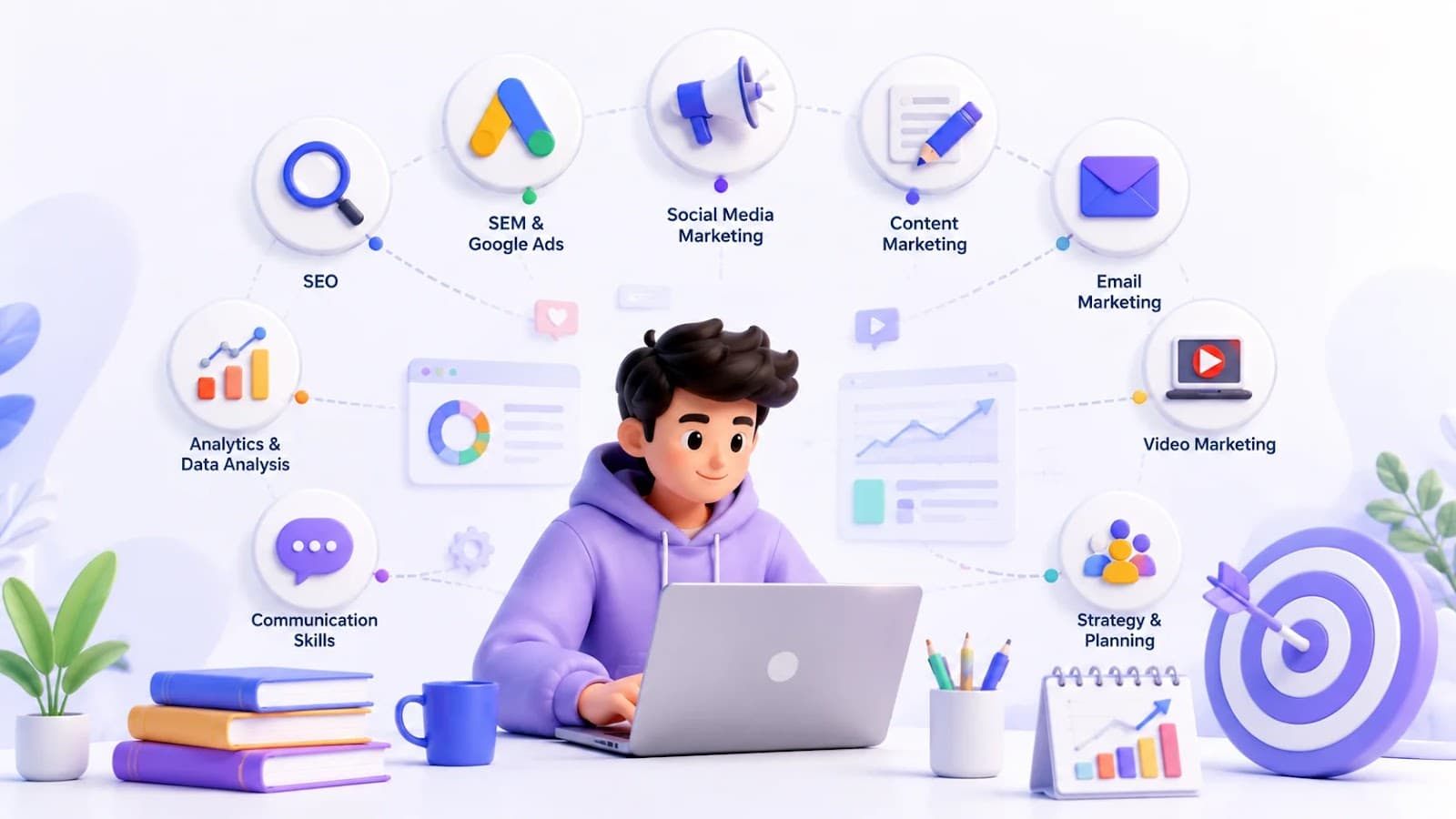
Explore the top 10 Digital Marketing Skills every student should master, from SEO and Google Ads to AI tools, to build a successful Marketing Skills portfolio and career.