
Loading
 ← Back to blogs
Learn the difference between SEO vs SEM, how SEM works, their benefits, key differences, and when to use each strategy to improve search engine visibility and business growth.
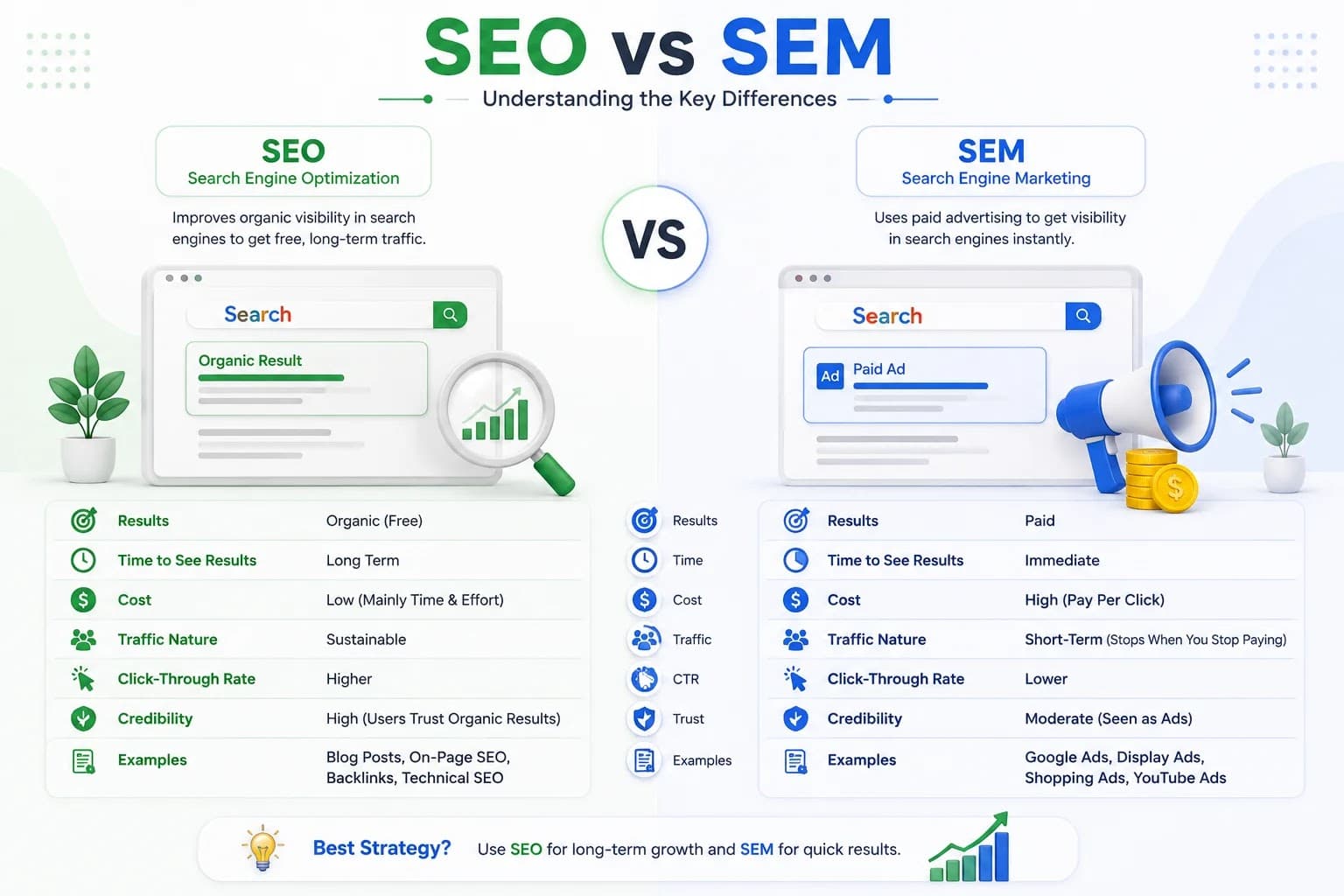
When businesses want to increase their online visibility, two of the most common strategies they use are SEO (Search Engine Optimization) and SEM (Search Engine Marketing). Although both help websites appear on search engine results pages (SERPs), they work in completely different ways.
Many beginners often confuse SEO vs SEM, thinking they are the same. In reality, SEO focuses on earning organic traffic, while SEM uses paid advertising to gain immediate visibility.
In this guide, we'll explore the difference between SEO and SEM, their advantages, key features, and when businesses should use each strategy.
SEO (Search Engine Optimization) is the process of improving a website's visibility in organic (unpaid) search engine results.
SEO focuses on optimizing websites so search engines like Google rank them higher for relevant keywords.
SEO includes:
SEO helps businesses generate long-term organic traffic without paying for every visitor.
SEM (Search Engine Marketing) is a paid digital marketing strategy that increases website visibility through search engine advertisements.
Businesses use platforms like Google Ads to display sponsored ads when users search for specific keywords.
SEM allows businesses to appear at the top of search results almost instantly.
Advertisers typically pay only when users click on their advertisements (Pay-Per-Click or PPC).
Although both strategies improve search visibility, they differ in several important ways.
SEO generates organic traffic without paying for every website visitor.
However, businesses may invest in:
SEM requires businesses to pay for advertisements.
Costs depend on:
Every click usually has an associated cost.
Traffic comes from organic search results.
Users click naturally ranked websites without advertisements.
Traffic comes from sponsored advertisements displayed above or below organic search listings.
SEO is a long-term strategy.
Improving rankings usually takes several months depending on competition and website quality.
SEM provides immediate visibility.
Ads can begin generating traffic within hours after launching a campaign.
Websites appear naturally based on Google's ranking algorithm.
Higher-quality content and website optimization improve rankings.
Advertisements appear because businesses bid on relevant keywords through Google Ads.
Placement depends on:
SEO often provides excellent long-term ROI because traffic continues even after content is published.
SEM delivers faster results but requires continuous advertising spending to maintain traffic.
SEO mainly targets users searching for relevant keywords.
Targeting depends on search intent and optimized content.
SEM offers advanced targeting options including:
This makes paid campaigns highly customizable.
Many users trust organic search results more than advertisements.
Higher organic rankings often receive strong click-through rates.
Paid ads attract users looking for immediate solutions.
Well-written advertisements with relevant keywords can achieve excellent CTR.
SEO provides sustainable long-term traffic if websites continue producing quality content and maintaining best practices.
Traffic stops almost immediately when advertising campaigns are paused.
Continuous investment is required.
Feature | SEO | SEM |
Traffic Type | Organic | Paid |
Cost Per Click | Free | Paid |
Results | Long-term | Immediate |
Budget Required | Low to Medium | Flexible (Depends on Ad Spend) |
Website Ranking | Organic Listings | Sponsored Ads |
ROI | Long-term | Short-term & Fast |
Best For | Sustainable Growth | Quick Leads & Sales |
Maintenance | Continuous Optimization | Continuous Budget Management |
SEO offers several long-term benefits:
Businesses that consistently invest in SEO build a strong online presence.
SEM provides immediate business benefits.
Some advantages include:
SEM is especially useful when businesses need quick results.
SEO is the right choice if you want to:
Businesses focused on sustainable growth should invest heavily in SEO.
SEM is ideal when you want to:
Paid advertising delivers results much faster than organic SEO.
Yes.
The most successful digital marketing strategies combine both SEO and SEM.
For example:
A business can:
Using both strategies creates a balanced and effective digital marketing plan.
Professionals working with search marketing should develop these skills:
These skills are highly valuable in today's digital marketing industry.
Learning SEO and SEM opens doors to many career opportunities.
Popular job roles include:
Freelancing and agency opportunities are also growing rapidly.
Search marketing continues evolving with technology.
Emerging trends include:
Professionals who stay updated with these trends will remain highly competitive.
SEO focuses on improving organic search rankings through website optimization, while SEM uses paid advertisements to increase visibility on search engines.
Neither is better. SEO is ideal for long-term growth, while SEM is best for businesses that need immediate traffic and leads.
Yes. Combining SEO and SEM creates a stronger digital marketing strategy by balancing long-term organic growth with immediate paid results.
SEM budgets are flexible. Businesses can start with a small advertising budget and scale campaigns based on performance.
Beginners should first understand SEO fundamentals and then learn SEM using platforms like Google Ads for paid advertising.
Understanding SEO vs SEM is essential for anyone entering the world of digital marketing. While SEO helps businesses build long-term organic visibility through quality content and website optimization, SEM delivers immediate results by placing paid advertisements in front of users actively searching for products or services.
Instead of choosing one over the other, successful businesses often combine both strategies to maximize online visibility, generate consistent traffic, and achieve sustainable growth. Whether you're a student, business owner, or aspiring digital marketer, learning both SEO and SEM will equip you with valuable skills that are in high demand across the digital marketing industry.
Learn what Digital Marketing is, its types, benefits, career opportunities, AI trends, and why it's one of the most in-demand skills for students and professionals in 2026.
Discover the benefits of learning Digital Marketing after college, explore career opportunities, essential skills, freelancing, and how to build a successful Digital Marketing Career.
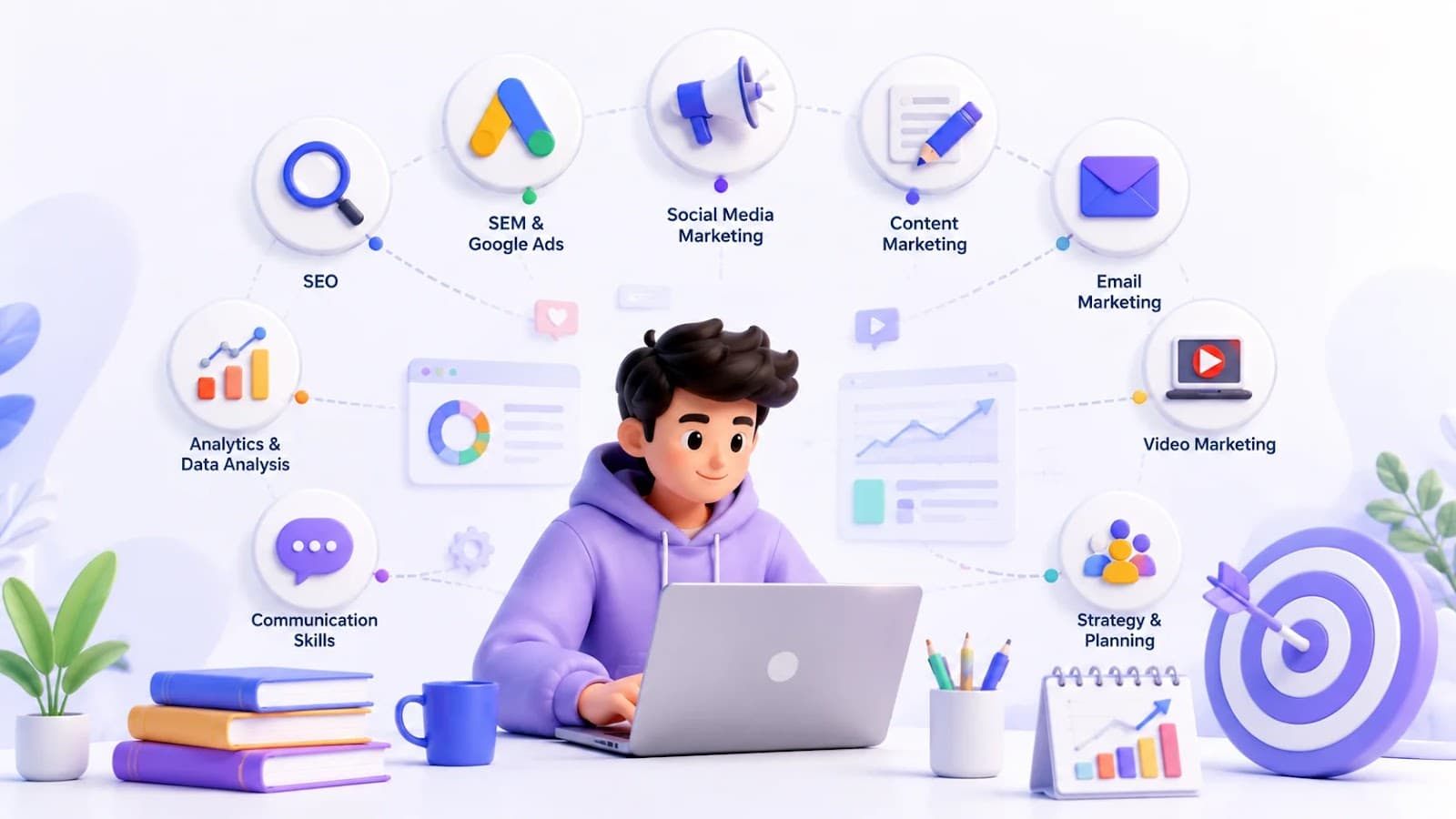
Explore the top 10 Digital Marketing Skills every student should master, from SEO and Google Ads to AI tools, to build a successful Marketing Skills portfolio and career.