
Loading
 ← Back to blogs
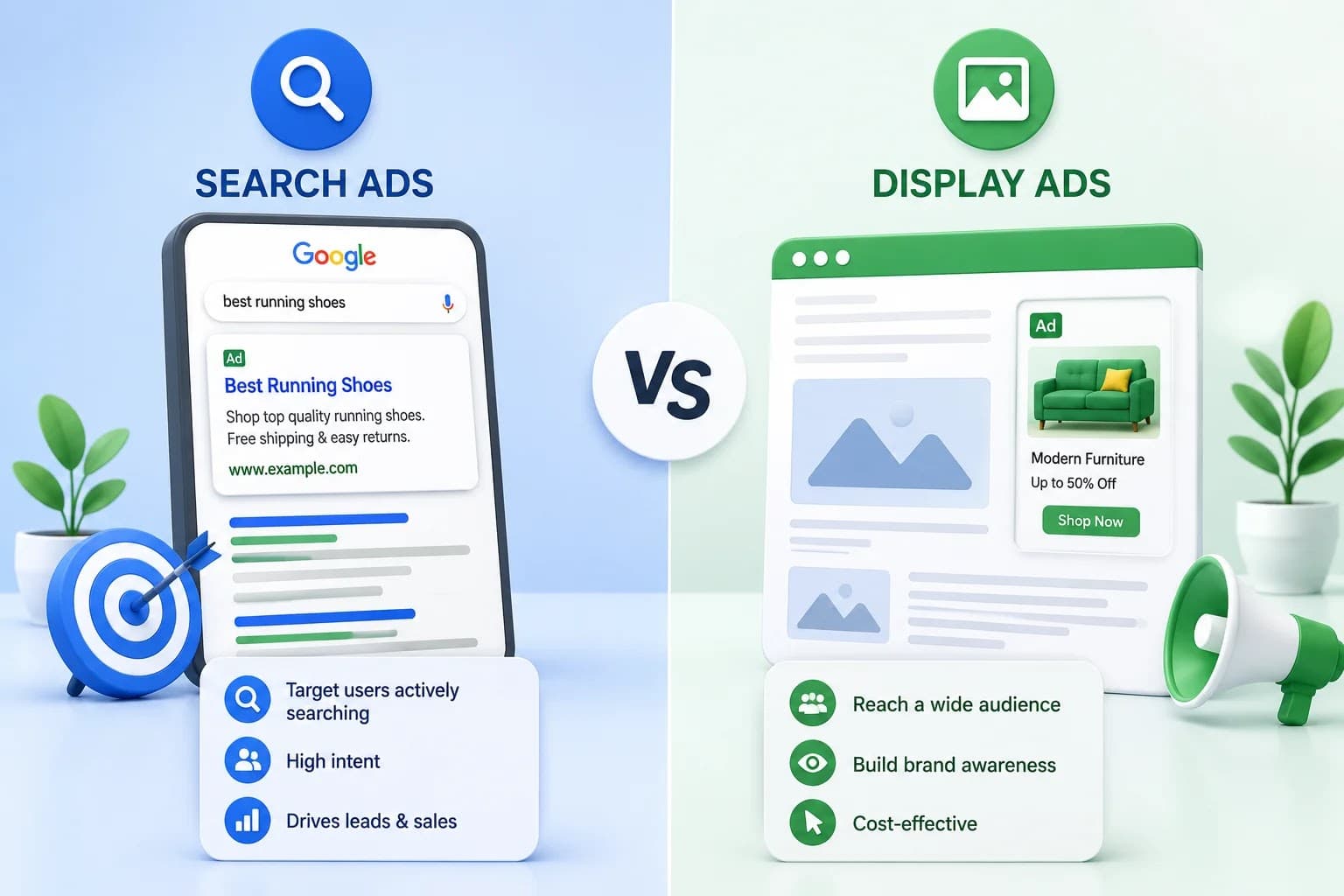
Compare Search Ads vs Display Ads, understand their differences, benefits, targeting options, and learn which Google Ads campaign suits your business goals.
Google Ads is one of the most effective digital marketing platforms for reaching potential customers at the exact moment they are searching for products or services. Whether you're a business owner, freelancer, student, or aspiring digital marketer, learning Google Ads can help you generate leads, increase sales, and grow businesses online.
Unlike Search Engine Optimization (SEO), which takes time to produce results, Google Ads allows your website to appear in search results almost immediately through paid advertising.
In this beginner-friendly guide, you'll learn what Google Ads is, how it works, the different campaign types, important terminology, and how to launch your first successful campaign.
Google Ads is Google's online advertising platform that allows businesses to display ads across Google's network.
Your ads can appear on:
Businesses pay only when users interact with their ads, depending on the campaign type and bidding strategy.
Google Ads helps businesses:
It is suitable for businesses of all sizes.
Google Ads works through an auction system.
When someone searches for:
Best Digital Marketing Course
Google evaluates advertisers targeting similar keywords.
The winning ads are determined by several factors, including:
The highest bidder doesn't always win. High-quality ads often perform better even with lower bids.
Every search triggers an instant auction.
Google evaluates:
Ads with better relevance and user experience often achieve better positions at a lower cost.
Search ads appear on Google Search results.
Example:
A user searches:
"Best SEO Course"
Your text advertisement appears at the top of the search results.
Best for:
Display ads appear as banners on websites within Google's Display Network.
Best for:
Shopping campaigns display products with:
Ideal for:
Video advertisements appear on YouTube.
Useful for:
Performance Max uses Google's AI to display ads across multiple Google platforms from a single campaign.
Ads may appear on:
Best for businesses seeking broad reach using automated optimization.
Designed to promote mobile applications.
Ads appear across:
Before creating campaigns, understand these common terms.
The words users type into Google.
Example:
The amount you pay when someone clicks your advertisement.
The percentage of people who click your ad after seeing it.
Formula:
CTR = (Clicks ÷ Impressions) × 100
Higher CTR often indicates more relevant ads.
An impression is counted each time your advertisement is shown to users.
A conversion is the desired action completed by a visitor.
Examples:
Google assigns a Quality Score based on:
Higher Quality Scores can improve ad positions and reduce advertising costs.
Google Ads provides different keyword matching options.
Shows ads for a wide variety of related searches.
Maximum reach, but less control.
Shows ads when searches include the meaning of your keyword phrase.
Provides a balance between reach and relevance.
Shows ads for searches that closely match your keyword.
Offers the highest level of targeting.
Negative keywords prevent ads from appearing for unwanted searches.
Example:
If you sell paid courses, you may exclude:
This helps reduce irrelevant clicks and improve campaign efficiency.
Create a Google Ads account.
Select your campaign goal.
Examples:
Choose your campaign type.
Example:
Search Campaign
Select your target location.
Examples:
Or choose multiple locations based on your audience.
Choose your language.
Set your daily budget.
Choose a budget you are comfortable spending while testing campaign performance.
Select keywords.
Use keywords that closely match your products or services.
Write compelling advertisements.
Include:
Add your landing page.
The landing page should match the advertisement and provide a good user experience.
Launch your campaign and monitor performance regularly.
A strong ad should include:
Example:
Headline:
Learn Digital Marketing from Industry Experts
Description:
Join practical online and offline classes with expert trainers. Enroll today.
Your landing page should:
A good landing page improves conversion rates.
Monitor key metrics such as:
Use this data to improve your campaigns over time.
Consistent optimization leads to better results.
Avoid these common errors:
Learning from these mistakes improves campaign success.
Google Ads | SEO |
Paid traffic | Organic traffic |
Immediate visibility | Long-term growth |
Budget required | No advertising cost |
Stops when budget ends | Continues after ranking |
Fast lead generation | Sustainable traffic growth |
Many businesses use both strategies together for the best results.
✔ Understand Google Ads basics
✔ Learn campaign types
✔ Research keywords
✔ Understand keyword match types
✔ Learn Quality Score
✔ Create effective advertisements
✔ Build optimized landing pages
✔ Track conversions
✔ Analyze campaign reports
✔ Optimize campaigns regularly
Google Ads is Google's online advertising platform that allows businesses to promote products and services across Google Search, YouTube, the Display Network, and other Google properties.
Yes. Google Ads offers beginner-friendly campaign options, and with proper learning and testing, new advertisers can create effective campaigns.
There is no fixed cost. Advertisers choose their own budget, and costs vary depending on competition, keywords, bidding strategy, and campaign goals.
They serve different purposes. Google Ads provides immediate visibility through paid advertising, while SEO focuses on long-term organic traffic. Many businesses benefit from using both together.
Google Ads can start generating traffic soon after your campaign is approved. However, achieving strong performance often requires ongoing testing and optimization.
Google Ads is one of the fastest ways to reach potential customers and grow your business online. By understanding campaign types, keyword targeting, Quality Score, and landing page optimization, beginners can build effective advertising campaigns that generate meaningful results.
Success with Google Ads comes from continuous learning, testing, and refinement. Start with a clear objective, monitor your performance regularly, and make data-driven improvements over time. Combined with a strong website and a solid SEO strategy, Google Ads can become a powerful tool for long-term business growth.

Learn what Digital Marketing is, its types, benefits, career opportunities, AI trends, and why it's one of the most in-demand skills for students and professionals in 2026.
Discover the benefits of learning Digital Marketing after college, explore career opportunities, essential skills, freelancing, and how to build a successful Digital Marketing Career.
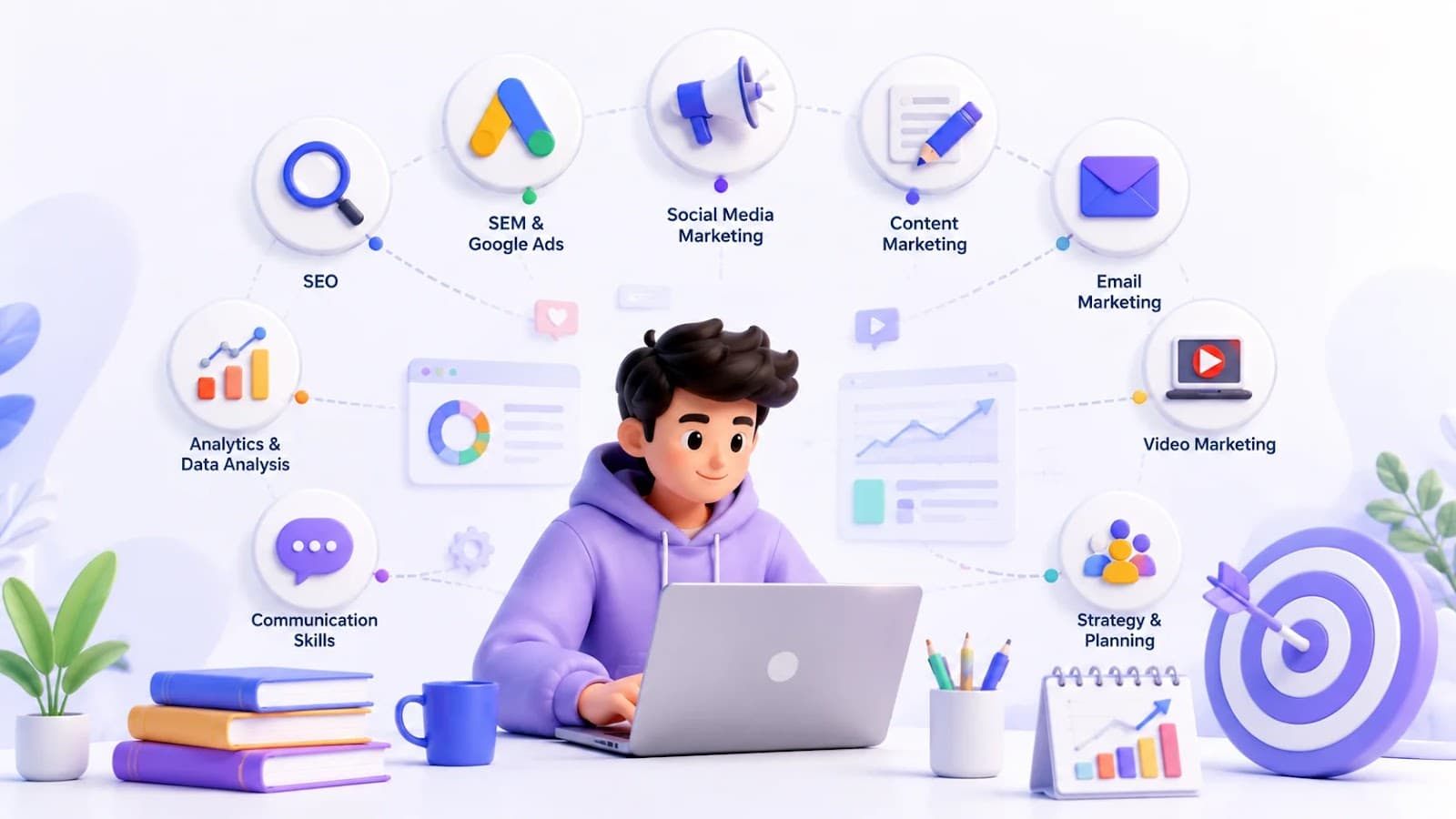
Explore the top 10 Digital Marketing Skills every student should master, from SEO and Google Ads to AI tools, to build a successful Marketing Skills portfolio and career.