
Loading
 ← Back to blogs
Learn how to create a portfolio as a fresher. Discover portfolio ideas, project examples, platforms, case studies, resume tips, and common mistakes.
Getting your first job can be challenging when you don't have much professional experience. One of the best ways to demonstrate your abilities is by creating a professional portfolio.
A portfolio gives recruiters and potential clients something more valuable than a list of skills: evidence of what you can actually do.
For freshers, a portfolio doesn't need to contain years of professional work. It can include academic projects, personal projects, internships, freelance work, certifications, case studies, and practical assignments.
For example, a digital marketing fresher can create an SEO audit, keyword research project, social media campaign, Google Ads campaign plan, or content strategy and showcase it in a portfolio.
In this guide, you'll learn what a portfolio is, why freshers need one, what to include, how to create projects without professional experience, how to structure your portfolio, and common mistakes to avoid.
A professional portfolio is a collection of work that demonstrates your skills, knowledge, experience, and capabilities.
A portfolio can contain:
A resume tells recruiters what you have done.
A portfolio can show them how you did it.
Freshers often face a common problem:
"How can I get experience if every job requires experience?"
A portfolio can help solve part of this problem by demonstrating practical skills before you have extensive professional experience.
A good portfolio can help you:
Your portfolio doesn't need to be perfect. It needs to demonstrate your ability to learn and apply knowledge.
A resume and portfolio serve different purposes.
Resume | Portfolio |
Summarizes your background | Demonstrates your work |
Lists skills | Shows how you use those skills |
Usually concise | Can contain detailed projects |
Focuses on qualifications | Focuses on evidence |
Used for quick evaluation | Used for deeper evaluation |
The best approach is to use both.
Resume → Get attention
Portfolio → Demonstrate capability
A basic portfolio can include:
You don't need to include every section if you don't have relevant information.
Focus on quality rather than quantity.
Start with a short introduction explaining who you are and what you do.
For example:
I am a digital marketing graduate interested in SEO, paid advertising, content marketing, and social media marketing. I enjoy developing practical marketing projects and learning how digital strategies can help businesses attract and convert customers.
Keep the introduction short and focused.
Your About section can provide more information about:
Avoid writing a long autobiography.
Focus on information that helps recruiters understand your professional direction.
Create a clear skills section.
For a digital marketing fresher, this could include:
Only include skills you genuinely understand.
Projects should be one of the most important sections of a fresher portfolio.
You can create projects even without having a paying client.
Examples include:
The purpose is to demonstrate your ability to apply your knowledge.
You don't need to wait for a company to give you an assignment.
Choose a real or fictional business and create a practical project.
For example:
SEO Strategy for a Local Bakery
You could include:
Clearly label the project as a personal or practice project.
This shows initiative without pretending that the work was performed for a client.
A case study explains a project in more detail.
A simple case study structure is:
What was the challenge?
What information did you collect?
What approach did you choose?
What did you actually do?
What happened?
What did you learn?
For practice projects where there are no real business results, don't invent numbers.
Instead, explain the expected outcome or what you learned from the exercise.
Objective: Develop a keyword strategy for a sample education website.
Process:
Deliverable:
A keyword research spreadsheet and content plan.
Skills Demonstrated:
This type of project demonstrates practical knowledge without requiring professional client experience.
If you have completed an internship, include relevant work.
For example:
Digital Marketing Intern
You could showcase:
Where possible, link the portfolio project to the relevant experience.
Freelance projects can add significant value to a fresher portfolio.
Examples include:
Describe your contribution clearly and honestly.
If client information is confidential, don't publish private data without permission.
Certifications can support your portfolio, especially when you're beginning your career.
Relevant certifications may include:
Certificates should complement your practical projects rather than replace them.
Include relevant education information such as:
You can also link academic projects to detailed portfolio pages.
If you've worked with clients, mentors, internship supervisors, or project collaborators, you can include genuine testimonials where appropriate.
Testimonials can provide social proof.
Never create fake testimonials.
Make it easy for recruiters or clients to contact you.
You can include:
Avoid publishing sensitive personal information unnecessarily.
Freshers have several options for creating a portfolio.
You can use:
The best platform depends on your profession and technical skills.
For example:
Designer → Behance or personal website
Developer → GitHub + personal website
Digital Marketer → Personal website or portfolio platform
Content Writer → Personal website + writing samples
The platform matters less than the quality of your work.
A personal website can make your portfolio more professional.
A simple structure could be:
Home
↓
About
↓
Skills
↓
Projects
↓
Case Studies
↓
Certifications
↓
Contact
Keep navigation simple so visitors can quickly find your work.
You don't need dozens of projects.
Start with 3–5 strong projects.
For example, a digital marketing fresher could create:
Five well-presented projects are generally more useful than twenty poorly explained projects.
Every project should answer:
Explain the topic.
Explain what you wanted to achieve.
Describe your process.
Mention relevant tools.
Share practical takeaways.
Use genuine results if available.
This structure makes projects easy to understand.
Depending on your profession, visuals can make your portfolio easier to understand.
For digital marketing projects, you could include:
Make sure screenshots don't expose confidential client information.
Your portfolio should represent your own skills.
Avoid:
You can use tutorials and examples to learn, but create your own final projects.
Your portfolio should grow with your career.
Update it when you:
Remove outdated or weak projects when you have stronger work to replace them.
Recruiters don't want to spend several minutes trying to understand what you do.
Make your portfolio:
Put your strongest projects near the top.
Your portfolio should reflect the job you're targeting.
Show:
Show:
Show:
Don't create a portfolio that tries to demonstrate every possible skill.
A portfolio without examples of work provides little evidence of your skills.
More projects don't necessarily make a portfolio better.
Choose your strongest work.
Never invent traffic, leads, revenue, rankings, or campaign performance.
Be honest about whether a project is personal, academic, or professional.
Visitors should be able to find your work quickly.
Use concise explanations and visuals where appropriate.
Your portfolio should work properly on phones, tablets, and desktops.
Make it easy for recruiters to move between your resume and portfolio.
A recruiter shouldn't have to search for a way to contact you.
If you're building your first digital marketing portfolio, try these projects:
Choose a website and analyze its basic SEO elements.
Create a keyword strategy for a selected industry.
Create a 30-day social media content calendar for a sample brand.
Create a sample campaign structure with keywords, ad groups, ad copy, and landing page recommendations.
Analyze sample or permitted analytics data and explain important findings.
These projects can demonstrate different areas of digital marketing.
Your portfolio and LinkedIn profile should work together.
Your LinkedIn profile can introduce your professional identity.
Your portfolio can provide detailed evidence of your work.
For example:
Digital Marketing Student | SEO | Google Ads | Content Marketing
↓
Portfolio
SEO Audit | Keyword Research | Google Ads Campaign Plan | Content Strategy
This creates a consistent professional identity across platforms.
Your resume should contain links to your strongest portfolio work.
For example:
Projects
SEO Strategy Project — Portfolio Link
Google Ads Campaign Project — Portfolio Link
This allows recruiters to move from a quick resume review to detailed project evidence.
Follow these steps:
Decide whether you want to focus on:
Choose projects related to your target job.
Focus on practical execution.
Save screenshots, research, reports, and deliverables.
Explain your objective, process, tools, and learning.
Use a website or portfolio platform that suits your profession.
Make your professional profiles easy to access.
Check spelling, links, formatting, and mobile appearance.
Add the portfolio link to your resume and LinkedIn profile.
A portfolio is not mandatory for every job, but it can be extremely useful for demonstrating practical skills, especially when you have limited professional experience.
Freshers can include personal projects, academic projects, internships, freelance work, case studies, certifications, and relevant work samples.
Start with around 3–5 strong and relevant projects rather than trying to create a large number of projects.
Yes. You can create personal and practice projects to demonstrate your skills. Clearly identify them as personal, academic, or practice projects.
No. A personal website can be useful, but you can start with other suitable portfolio platforms. Choose an option that allows you to present your work clearly.
Yes. Including your resume can make it easier for recruiters to understand your background and qualifications.
Yes, a portfolio can be especially valuable for digital marketing freshers because it can demonstrate practical skills in SEO, paid advertising, content, social media, and analytics.
A portfolio can help freshers overcome one of the biggest challenges at the beginning of their careers: having limited professional experience.
You don't need to wait for your first job to start building one.
Create practical projects, document your process, explain what you learned, and present your strongest work professionally. Be honest about which projects are personal, academic, internship, freelance, or client work.
Your first portfolio may be simple. That's completely fine.
As you gain experience, keep improving it with stronger projects, real results, case studies, and professional achievements.
Don't just tell employers what you can do. Give them something they can see.

Learn what Digital Marketing is, its types, benefits, career opportunities, AI trends, and why it's one of the most in-demand skills for students and professionals in 2026.

Discover the benefits of learning Digital Marketing after college, explore career opportunities, essential skills, freelancing, and how to build a successful Digital Marketing Career.
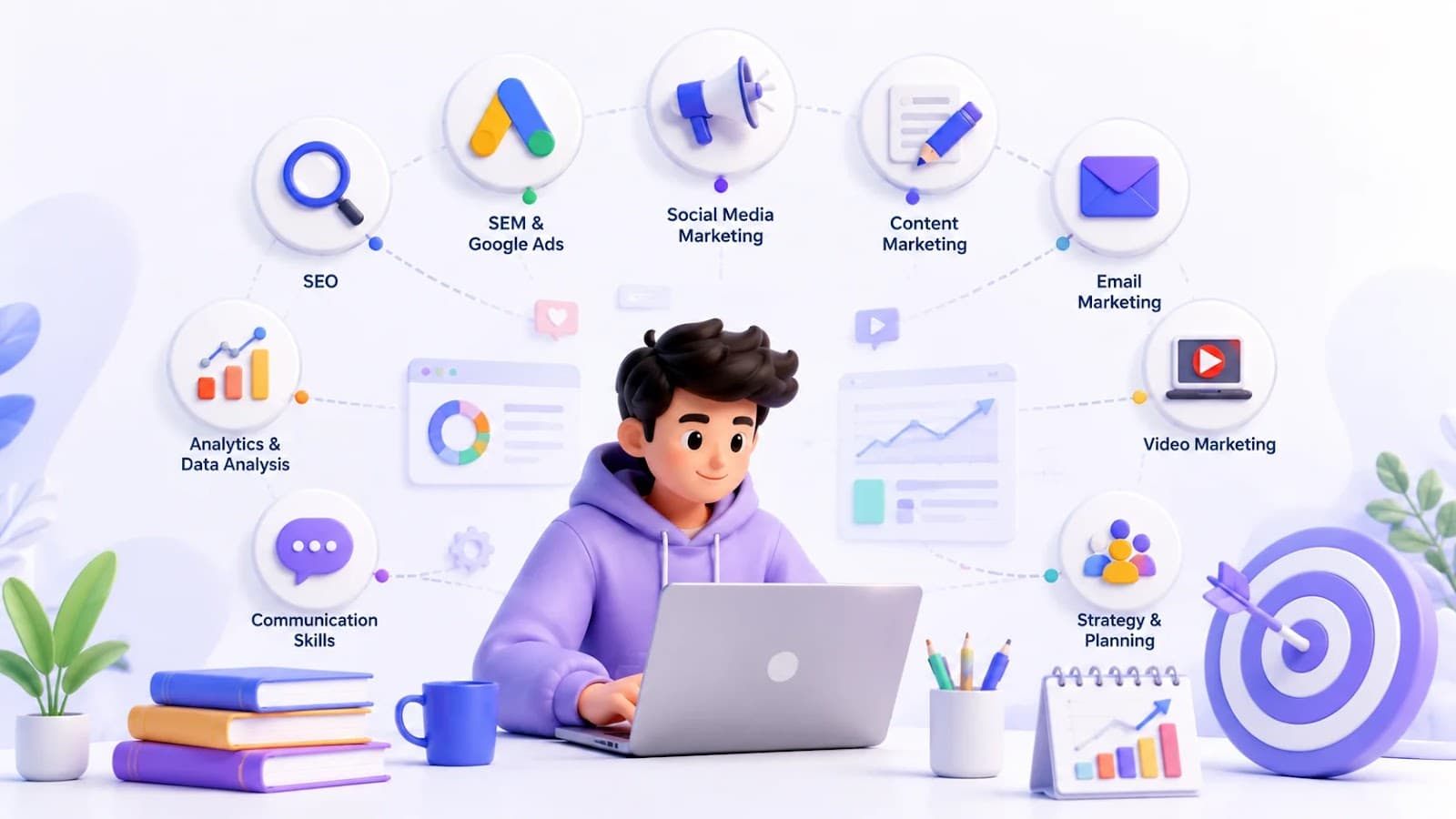
Explore the top 10 Digital Marketing Skills every student should master, from SEO and Google Ads to AI tools, to build a successful Marketing Skills portfolio and career.