
Loading
 ← Back to blogs
Follow this complete On Page SEO guide with an easy SEO Checklist to optimize your webpages, improve Google rankings, increase organic traffic, and enhance user experience.
Ranking higher on Google isn't just about creating quality content—it also requires proper On Page SEO. Even the best-written articles may struggle to rank if important optimization techniques are missing. From keyword placement and title tags to internal links and page speed, every element plays a role in improving search engine visibility.
A well-structured SEO Checklist helps ensure that every webpage is optimized before it is published. Whether you're a blogger, business owner, student, or digital marketer, following on-page SEO best practices can increase organic traffic, improve user experience, and boost your website's rankings.
In this beginner-friendly guide, we'll cover a complete On Page SEO Checklist that you can use to optimize every page on your website.
On Page SEO is the process of optimizing individual web pages to improve their visibility in search engine results and provide a better experience for users.
Unlike Off-Page SEO, which focuses on backlinks and external factors, On Page SEO deals with elements that you can control directly on your website.
These include:
Proper On Page SEO helps search engines understand your content and improves the chances of ranking for relevant keywords.
On Page SEO helps:
Without proper optimization, search engines may struggle to understand your content.
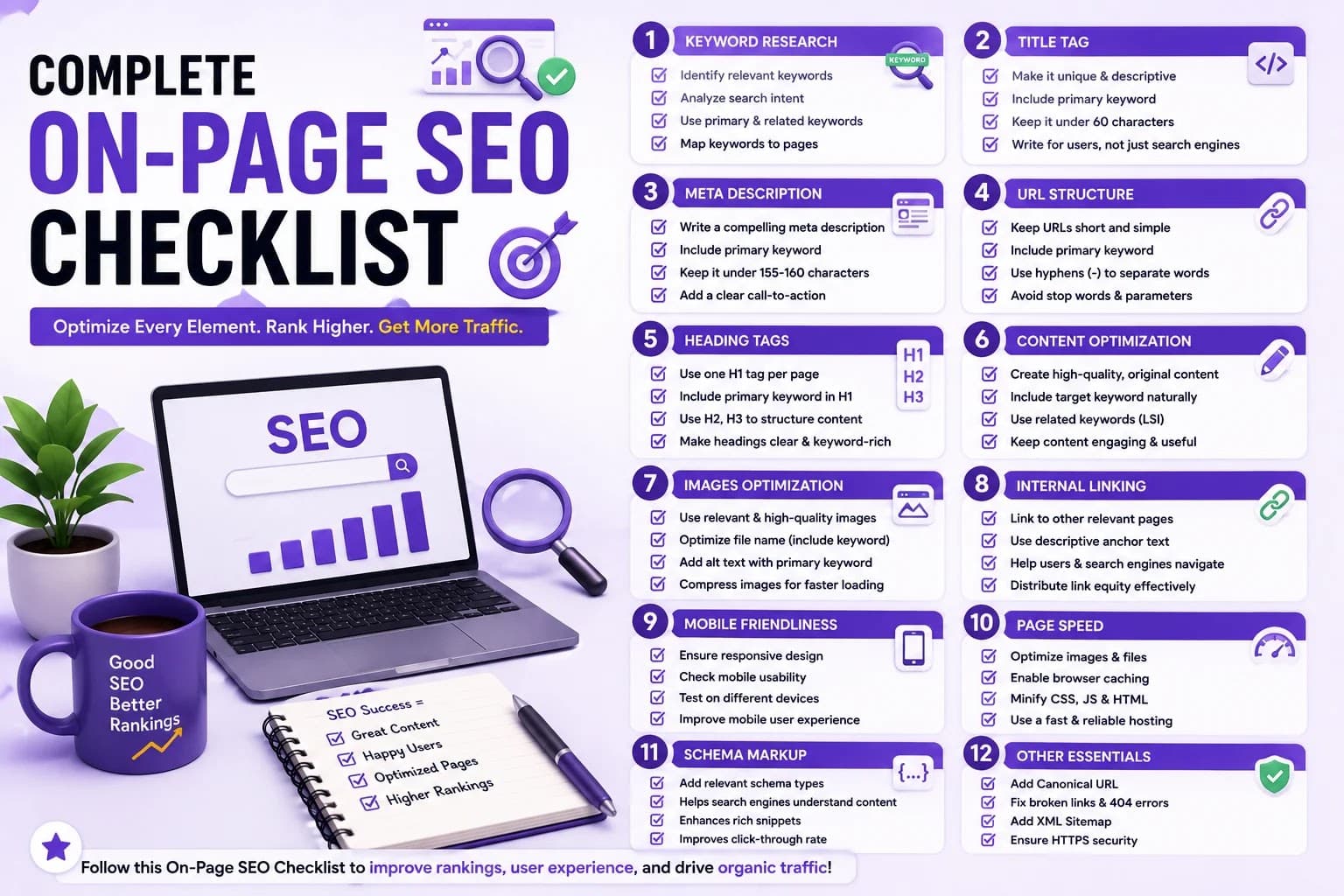
Use the following checklist before publishing any webpage or blog post.
Start by identifying the primary and secondary keywords your audience is searching for.
Good keyword research helps you understand:
Use relevant keywords naturally throughout your content.
Your title tag is one of the most important ranking factors.
Best practices:
Example:
Complete On Page SEO Checklist for Beginners
A good meta description encourages users to click your page.
Tips:
Your URL should be:
Example:
✅ yourwebsite.com/on-page-seo-checklist
Avoid long URLs with unnecessary numbers or symbols.
Organize your content using headings.
Recommended structure:
Headings improve readability and help search engines understand your content.
Include your primary keyword in:
Avoid keyword stuffing, as it can negatively affect rankings.
Content should be:
Focus on solving the user's problem rather than simply adding keywords.
Images improve user engagement but should also be optimized.
Checklist:
Optimized images improve page speed and accessibility.
Internal links connect related pages on your website.
Benefits include:
Link naturally to relevant content.
Link to trustworthy and relevant sources when appropriate.
External links help:
Choose reliable and authoritative websites.
Fast websites provide a better user experience.
Ways to improve speed:
Page speed is an important ranking factor.
Most users browse websites on mobile devices.
Your website should:
Google uses mobile-first indexing, making mobile optimization essential.
Good UX improves engagement and rankings.
Focus on:
A positive user experience keeps visitors on your site longer.
Schema markup helps search engines understand your content.
It can improve search results with rich snippets such as:
Structured data can increase visibility in search results.
Every page should encourage users to take the next step.
Examples:
A CTA improves user engagement and conversions.
Broken links create a poor user experience.
Regularly review your website to:
Healthy links improve website quality.
Make your content easy to read.
Tips:
Readable content keeps users engaged.
SEO is an ongoing process.
Regular updates help:
Review important pages periodically.
Avoid these common errors:
Fixing these issues can improve both rankings and user satisfaction.
SEO professionals use various tools to optimize websites.
Popular tools include:
These tools help identify optimization opportunities and technical issues.
Using a structured SEO Checklist helps you:
Consistency is one of the keys to successful SEO.
On Page SEO is the process of optimizing individual webpages, including content, headings, keywords, images, and technical elements, to improve search engine rankings.
It helps search engines understand your content, improves user experience, and increases the chances of ranking higher in search results.
Review your checklist regularly and update it whenever search engine algorithms or SEO best practices change.
No. While On Page SEO is essential, combining it with Off-Page SEO, Technical SEO, and high-quality content produces the best results.
Tools like Google Search Console, Google Analytics, Yoast SEO, Rank Math, Ahrefs, and SEMrush are widely used for optimizing webpages.
Mastering On Page SEO is one of the most effective ways to improve your website's visibility, attract organic traffic, and create a better experience for your visitors. By following a structured SEO Checklist, you can ensure that every page is properly optimized with relevant keywords, quality content, fast loading speeds, mobile-friendly design, and strong internal linking.
Remember that SEO is not a one-time task but an ongoing process. Regularly reviewing and updating your content, monitoring performance, and staying informed about Google's latest best practices will help you maintain and improve your search rankings. Whether you're a beginner or an experienced digital marketer, using this checklist consistently will build a strong foundation for long-term SEO success.
Learn what Digital Marketing is, its types, benefits, career opportunities, AI trends, and why it's one of the most in-demand skills for students and professionals in 2026.

Discover the benefits of learning Digital Marketing after college, explore career opportunities, essential skills, freelancing, and how to build a successful Digital Marketing Career.
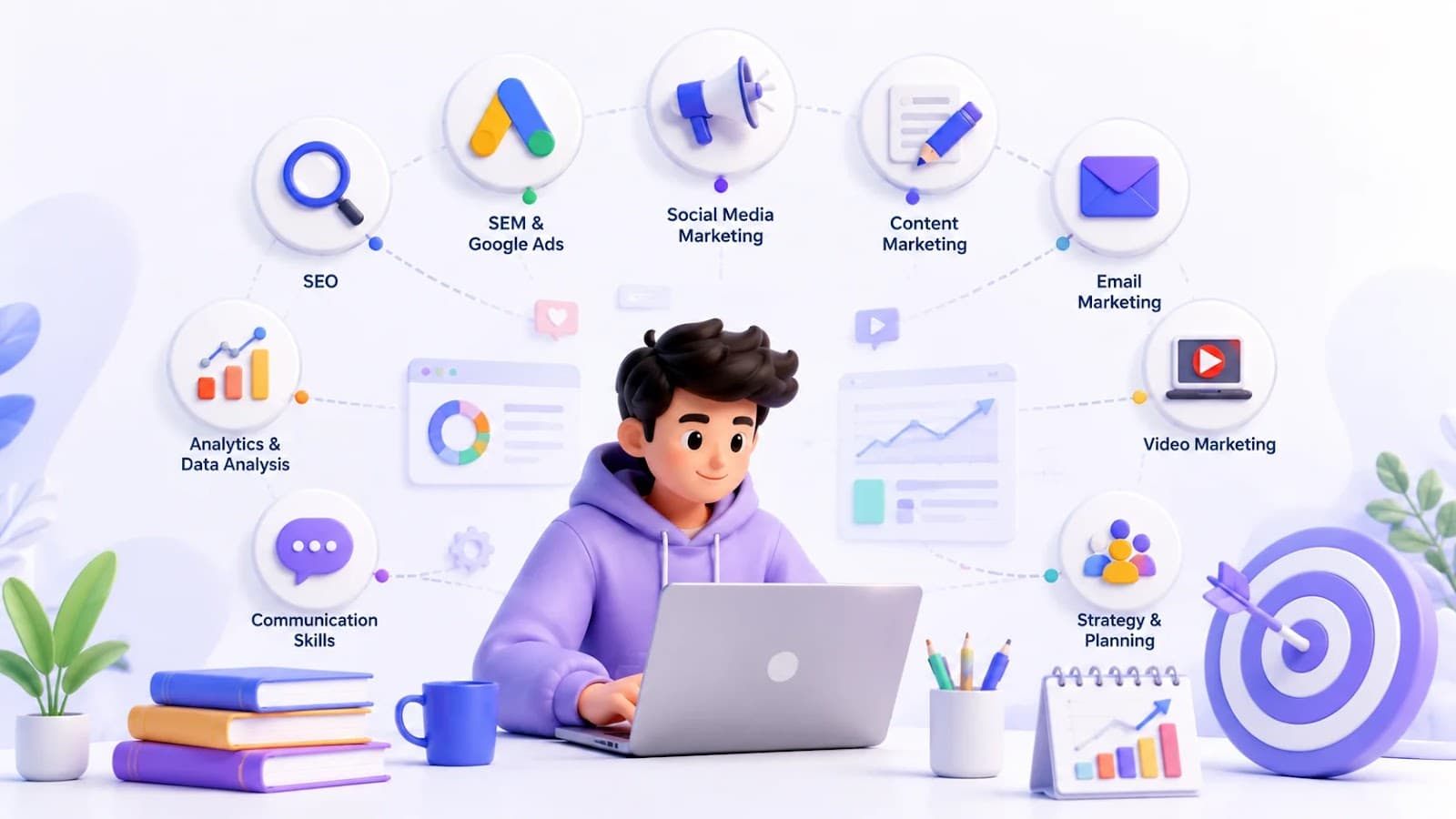
Explore the top 10 Digital Marketing Skills every student should master, from SEO and Google Ads to AI tools, to build a successful Marketing Skills portfolio and career.