
Loading
 ← Back to blogs
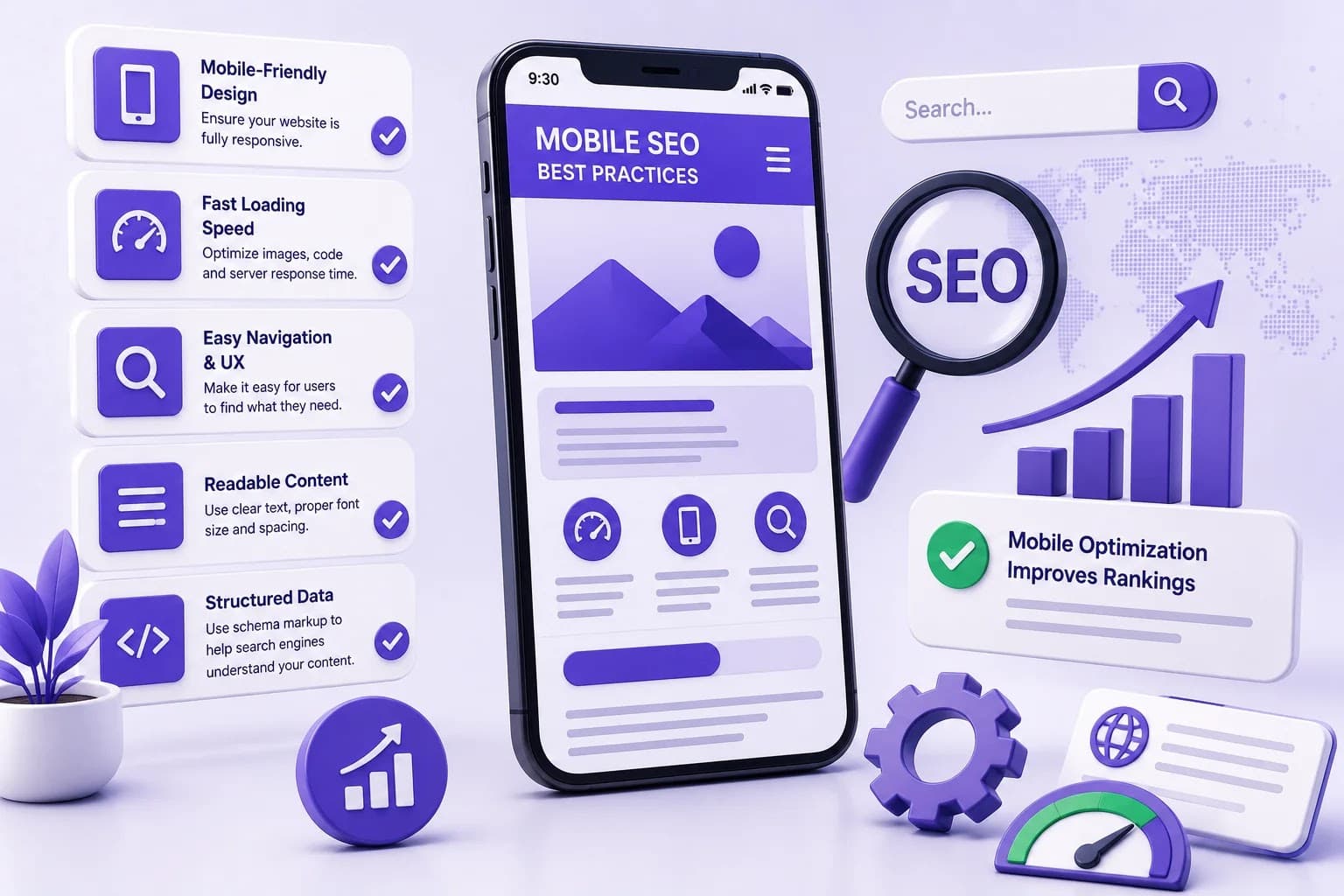
Learn Mobile SEO best practices to improve page speed, mobile usability, responsive design, Core Web Vitals, and Google rankings in 2026.
Today, most internet users browse websites using smartphones and tablets instead of desktop computers. Whether they're shopping online, reading blogs, searching for local businesses, or watching videos, mobile devices have become the primary way people access the web.
Because of this shift, Google uses Mobile-First Indexing, meaning it primarily evaluates the mobile version of your website when determining search rankings.
If your website isn't optimized for mobile users, you may experience lower rankings, slower loading speeds, and reduced conversions.
In this guide, you'll learn everything you need to know about Mobile SEO and the best practices to improve your website's performance in 2026.
Mobile SEO is the process of optimizing your website to provide the best possible experience for users on smartphones and tablets.
It focuses on:
A mobile-optimized website helps both users and search engines.
Google now evaluates websites based on their mobile version.
A mobile-friendly website offers several benefits:
Mobile SEO is no longer optional—it's an essential part of every successful SEO strategy.
Mobile-First Indexing means Google primarily uses the mobile version of your website to crawl, index, and rank your pages.
If your desktop website is excellent but your mobile version is slow or incomplete, your rankings may suffer.
Your mobile and desktop versions should provide the same valuable content and functionality.
Optimizing for mobile devices helps you:
Responsive design automatically adjusts your website layout based on the visitor's screen size.
Advantages include:
Responsive design is the recommended approach for modern websites.
Mobile users expect websites to load quickly.
Ways to improve speed:
A faster website creates a better experience for visitors.
Google measures mobile performance using Core Web Vitals.
Measures loading performance.
Recommended:
Less than 2.5 seconds
Measures responsiveness.
Recommended:
Less than 200 milliseconds
Measures visual stability.
Recommended:
Less than 0.1
Improving these metrics supports both SEO and user satisfaction.
Avoid making users zoom in to read your content.
Recommended practices:
Readable content encourages visitors to stay on your website longer.
Users interact with mobile devices using their fingers.
Buttons and links should:
Touch-friendly navigation reduces frustration and improves usability.
Large pop-ups can block content and make it difficult to use your website on mobile devices.
Instead:
Keeping content accessible improves the mobile experience.
Large images slow down mobile websites.
Best practices:
Optimized images improve loading speed and user experience.
Mobile screens have limited space.
Your navigation should:
Simple navigation improves usability and engagement.
Long or complicated forms discourage users.
Optimize forms by:
Easy-to-use forms improve conversion rates.
Videos should load efficiently on mobile devices.
Recommendations:
Efficient video delivery improves page performance.
Google recommends secure websites.
HTTPS provides:
Always use HTTPS for your entire website.
Many mobile searches have local intent.
Examples:
Improve Local SEO by:
This helps nearby users discover your business.
Structured data helps search engines understand your content.
Useful schema types include:
Structured data can improve how your pages appear in search results.
Use clean and descriptive URLs.
Example:
example.com/mobile-seo-best-practices
Avoid long or confusing URLs with unnecessary parameters.
Regular testing helps identify issues before they affect users.
Recommended tools:
Monitor your website after updates to ensure it continues to perform well.
Avoid these common mistakes:
Correcting these issues improves both rankings and user satisfaction.
✔ Responsive website
✔ Fast loading speed
✔ Mobile-friendly design
✔ Readable text
✔ Large touch-friendly buttons
✔ Optimized images
✔ HTTPS enabled
✔ Responsive videos
✔ Simple navigation
✔ Short forms
✔ Core Web Vitals optimized
✔ Structured data added
✔ Local SEO optimized
✔ Regular mobile testing
These tools help analyze and improve mobile performance:
Using these tools regularly helps maintain excellent mobile performance.
Mobile SEO | Desktop SEO |
Optimized for smartphones and tablets | Optimized for larger screens |
Focuses on touch interaction | Focuses on mouse and keyboard |
Prioritizes mobile page speed | Prioritizes desktop performance |
Uses responsive layouts | Uses larger screen layouts |
Supports Mobile-First Indexing | Supports desktop usability |
A modern website should perform well on both mobile and desktop devices.
Mobile SEO is the process of optimizing a website for users accessing it from smartphones and tablets while improving visibility in search results.
Google primarily evaluates the mobile version of a website when determining search rankings, making mobile optimization essential.
Yes. Faster loading pages improve user experience and are an important factor in modern SEO.
Responsive design automatically adjusts a website's layout to fit different screen sizes, providing a consistent experience across devices.
No. Every website—including blogs, educational websites, portfolios, and business websites—benefits from Mobile SEO because a large percentage of users browse on mobile devices.
Mobile SEO is one of the most important aspects of modern search engine optimization. With Google using Mobile-First Indexing and the majority of users browsing on smartphones, providing a fast, responsive, and user-friendly mobile experience is essential for long-term success.
By improving page speed, optimizing images, using responsive design, simplifying navigation, and monitoring your website's performance regularly, you can create a better experience for your visitors while supporting stronger search engine rankings.
Mobile optimization isn't a one-time task. As devices, user expectations, and search technologies evolve, regularly testing and refining your website will help you maintain excellent performance and stay competitive.

Learn what Digital Marketing is, its types, benefits, career opportunities, AI trends, and why it's one of the most in-demand skills for students and professionals in 2026.

Discover the benefits of learning Digital Marketing after college, explore career opportunities, essential skills, freelancing, and how to build a successful Digital Marketing Career.
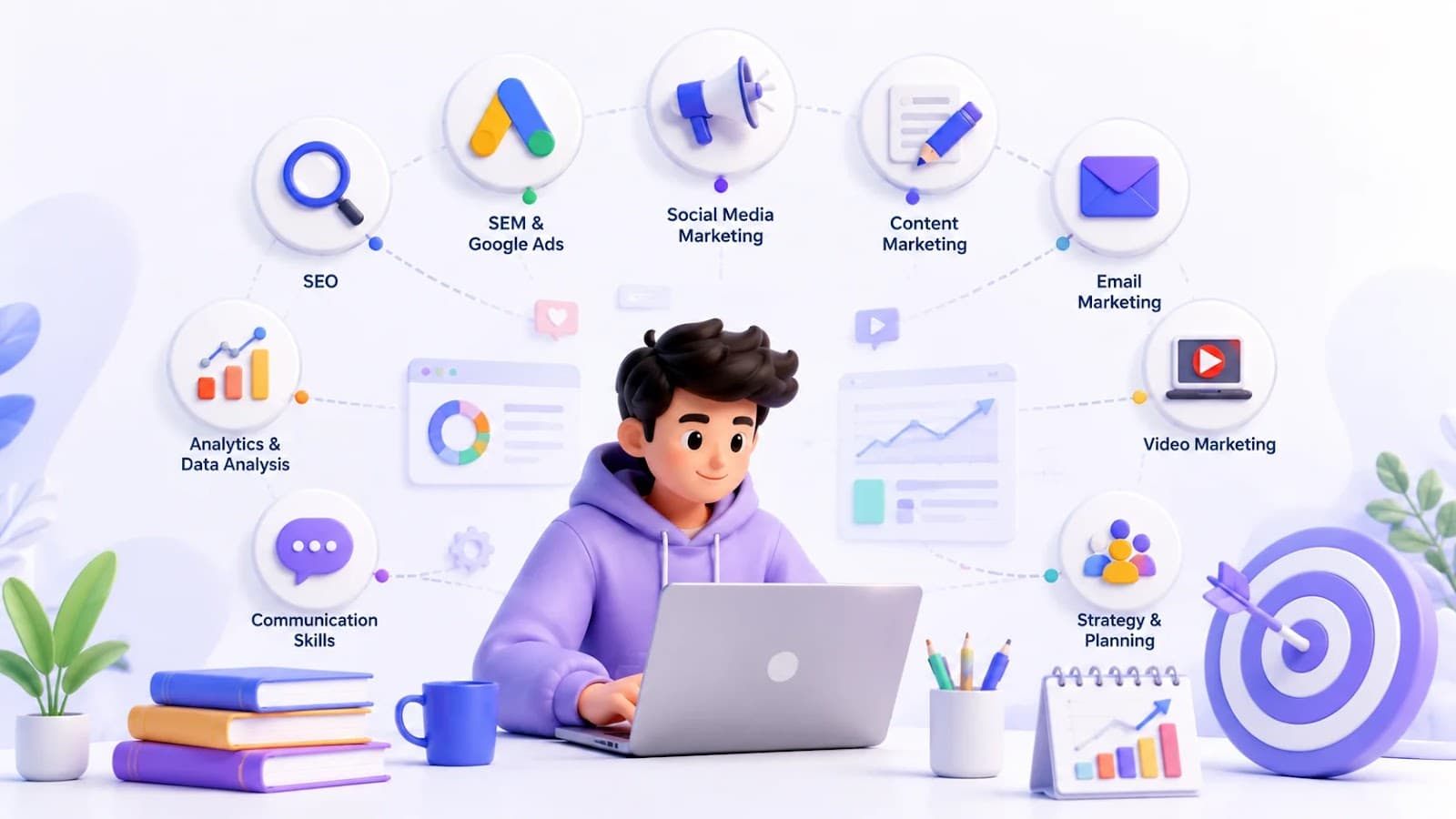
Explore the top 10 Digital Marketing Skills every student should master, from SEO and Google Ads to AI tools, to build a successful Marketing Skills portfolio and career.