
Loading
 ← Back to blogs
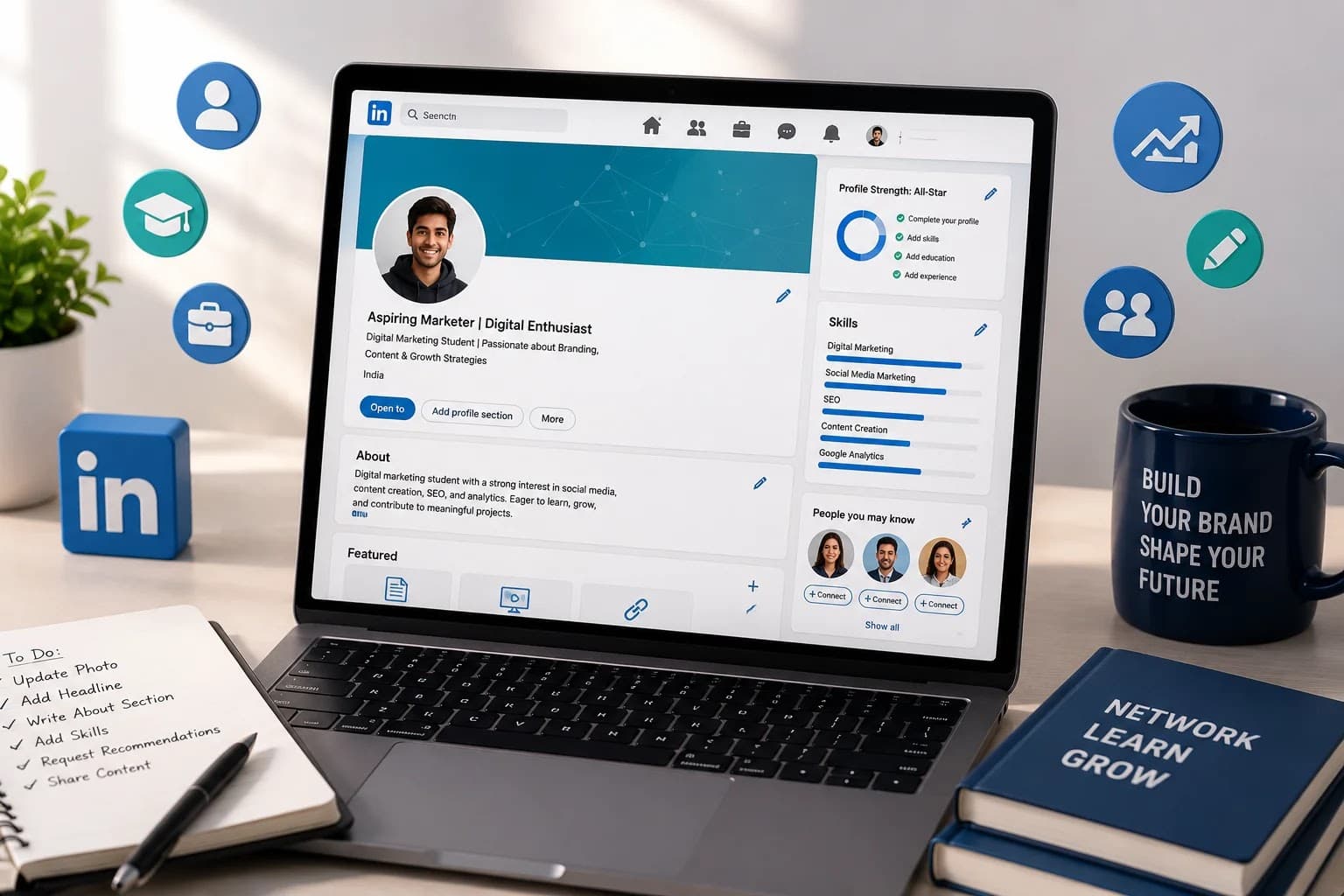
Learn LinkedIn optimization for students with practical tips for headlines, About sections, skills, projects, networking, internships, and job opportunities.
For students and fresh graduates, building a professional online presence can be an important step toward finding internships, jobs, freelance opportunities, and professional connections.
LinkedIn is one of the most useful platforms for building that presence. However, simply creating a LinkedIn account is not enough. Your profile should clearly communicate who you are, what you can do, what you have learned, and what kind of opportunities you're looking for.
A well-optimized LinkedIn profile can help recruiters, companies, professionals, and potential clients understand your skills and background.
In this guide, you'll learn how students can optimize their LinkedIn profiles, what sections to complete, how to write a strong headline and About section, showcase projects and skills, build connections, and use LinkedIn effectively for career development.
Students often think LinkedIn is only useful after getting a job. In reality, you can start building your professional profile while you're still studying.
LinkedIn can help students:
Starting early gives you more time to build your profile and network.
LinkedIn optimization means improving your profile so that it clearly communicates your professional skills, education, experience, projects, and career goals.
An optimized profile should answer three basic questions:
Who are you?
What can you do?
What opportunities are you looking for?
Your profile should be professional, accurate, and easy to understand.
Your profile photo is one of the first things people notice.
Choose a photo that is:
You don't necessarily need an expensive professional photoshoot. A clean background, good lighting, and appropriate clothing can be enough.
Avoid using:
Your headline appears prominently on your profile and in search results.
Avoid generic headlines such as:
Student
Instead, communicate your area of study, skills, and career direction.
Digital Marketing Student | SEO | Google Ads | Social Media Marketing | Content Creation
Another example:
Computer Science Student | React.js | Next.js | Full Stack Development | Open to Internships
A strong headline helps people quickly understand your professional direction.
The About section gives you more space to introduce yourself.
A good student profile can include:
I am a digital marketing student interested in SEO, paid advertising, content marketing, and social media marketing.
Through academic projects and practical learning, I am developing skills in keyword research, Google Ads, social media content, and analytics.
I enjoy learning new marketing tools and applying digital marketing concepts to real-world projects.
I am currently looking for opportunities to gain practical experience through internships and entry-level roles.
Keep your About section genuine. Don't claim experience or skills you don't actually have.
Students should make sure their education section is complete.
Include:
You can also add:
Your education section helps recruiters understand your academic background.
The Skills section helps communicate your areas of expertise.
For a digital marketing student, relevant skills might include:
Only add skills you actually understand or are actively learning.
Projects are especially important for students who don't have much professional experience.
Projects can demonstrate practical skills.
Examples:
Created an SEO strategy for a sample local business, including keyword research, content planning, and on-page optimization.
Built a responsive portfolio website using React and Tailwind CSS.
Created a sample Google Ads campaign structure including keywords, ad groups, advertisements, and landing page recommendations.
Projects give recruiters evidence of what you can actually do.
If you've completed relevant courses or certifications, add them to your LinkedIn profile.
Examples include certifications related to:
Don't add certificates simply to fill your profile. Prioritize certifications relevant to your career direction.
Even a short internship can be valuable.
Instead of simply writing:
Digital Marketing Intern
Explain what you actually did.
For example:
Use action-oriented descriptions where possible.
Professional experience isn't limited to full-time employment.
You can include relevant:
If the experience demonstrates useful skills, it can strengthen your profile.
A clean profile URL looks more professional when you share your profile with recruiters.
If LinkedIn provides the option, customize your public profile URL using your name or professional identity.
For example:
linkedin.com/in/yourname
A simple URL is easier to remember and share.
Networking is one of LinkedIn's most important benefits.
Students can connect with:
Don't focus only on increasing your connection count. Build a relevant network.
Avoid sending the same generic message to everyone.
Instead, briefly explain why you want to connect.
Hi, I’m a digital marketing student interested in SEO and performance marketing. I came across your profile while learning about the industry and would be happy to connect and learn from your experience.
Keep the message short and professional.
Follow companies you're interested in working for.
This can help you discover:
Create a list of companies that match your career goals and regularly follow their updates.
You don't need to become an influencer.
Start by sharing useful content related to your field.
Examples:
For example:
Today I learned how keyword intent affects SEO content strategy. One important takeaway was that ranking for a keyword isn't enough—the content should match what the searcher actually wants.
Posts like this can demonstrate your learning and professional interests.
You can increase your visibility by contributing useful comments to relevant posts.
Instead of:
Nice post!
Try:
The point about search intent is especially useful for beginners. Matching content with the user's actual goal can make SEO strategies much more effective.
Useful comments can help you participate in professional conversations.
LinkedIn profiles can benefit from using relevant professional terms naturally throughout the profile.
For example, a digital marketing student might naturally mention:
Don't fill your profile with repeated keywords. Your profile should still sound natural.
If you have a portfolio website, GitHub profile, design portfolio, or project collection, include it where appropriate.
A portfolio allows recruiters to see your actual work.
Students can showcase:
Skills tell people what you know. Projects show people what you can do.
As you gain experience, you can ask relevant people for LinkedIn recommendations.
Potential sources include:
A genuine recommendation can provide additional credibility.
Don't ask people who don't actually know your work.
Your LinkedIn profile should evolve as your career develops.
Update it when you:
Review your profile every few months.
A strong student profile can follow this structure:
Profile Photo
↓
Headline
↓
About
↓
Education
↓
Experience
↓
Projects
↓
Skills
↓
Certifications
↓
Portfolio
↓
Recommendations
This creates a complete professional profile even if you don't have extensive work experience.
Digital Marketing Student | SEO | Google Ads | Content Marketing | Social Media
I am a digital marketing student developing practical skills in SEO, paid advertising, content marketing, and social media marketing.
I enjoy working on practical projects that help me understand how digital marketing strategies can generate traffic, leads, and business growth.
Currently building my skills through courses, projects, and hands-on learning while looking for opportunities to gain industry experience.
This type of profile clearly communicates the student's direction without exaggerating their experience.
Students can use LinkedIn to search for:
Use relevant keywords and location filters when searching for opportunities.
As you approach graduation, update your profile to reflect your target role.
For example:
Aspiring Performance Marketing Specialist | Google Ads | Meta Ads | Analytics | Open to Entry-Level Opportunities
Make sure your experience and projects support the skills mentioned in your headline.
Student at XYZ College
This doesn't communicate your professional direction.
An empty About section is a missed opportunity to introduce yourself.
Don't list skills you cannot explain during an interview.
Use other profiles for inspiration, but create your own authentic story.
If you don't have professional experience, projects can demonstrate your abilities.
Avoid sending promotional or generic messages to large numbers of people.
LinkedIn optimization isn't a one-time activity. Update your profile as you learn and grow.
Before considering your profile complete, check:
✔ Professional profile photo
✔ Clear headline
✔ Strong About section
✔ Complete education
✔ Relevant skills
✔ Projects added
✔ Certifications added
✔ Internship experience included
✔ Portfolio linked
✔ Custom profile URL
✔ Relevant connections
✔ Companies followed
✔ Regular professional activity
✔ Profile information updated
Yes. Students can use LinkedIn to build a professional identity, connect with industry professionals, find internships, showcase projects, and explore career opportunities.
Include your current status, relevant skills, area of interest, and career direction.
For example:
Digital Marketing Student | SEO | Google Ads | Content Marketing | Open to Internships
Focus on your education, projects, certifications, volunteer work, skills, and practical learning. Projects can demonstrate your abilities even when you don't have professional experience.
There is no ideal number. Focus on building a relevant network of people connected to your industry, interests, education, and career goals.
Yes. Sharing useful learning experiences, projects, achievements, and industry insights can help students build professional visibility.
LinkedIn can be a powerful career-development platform for students when used strategically. You don't need years of experience or a long list of achievements to create a strong profile.
Start by clearly communicating who you are, what you're learning, what you can do, and where you want to go. Add relevant projects, certifications, skills, and experiences as you develop them.
Most importantly, don't treat LinkedIn as just an online resume. Use it to learn, network, share your work, participate in professional conversations, and discover opportunities.
Your LinkedIn profile can become a digital representation of your career journey. Start building it while you're a student, and continue improving it as your skills and experience grow.

Learn what Digital Marketing is, its types, benefits, career opportunities, AI trends, and why it's one of the most in-demand skills for students and professionals in 2026.

Discover the benefits of learning Digital Marketing after college, explore career opportunities, essential skills, freelancing, and how to build a successful Digital Marketing Career.
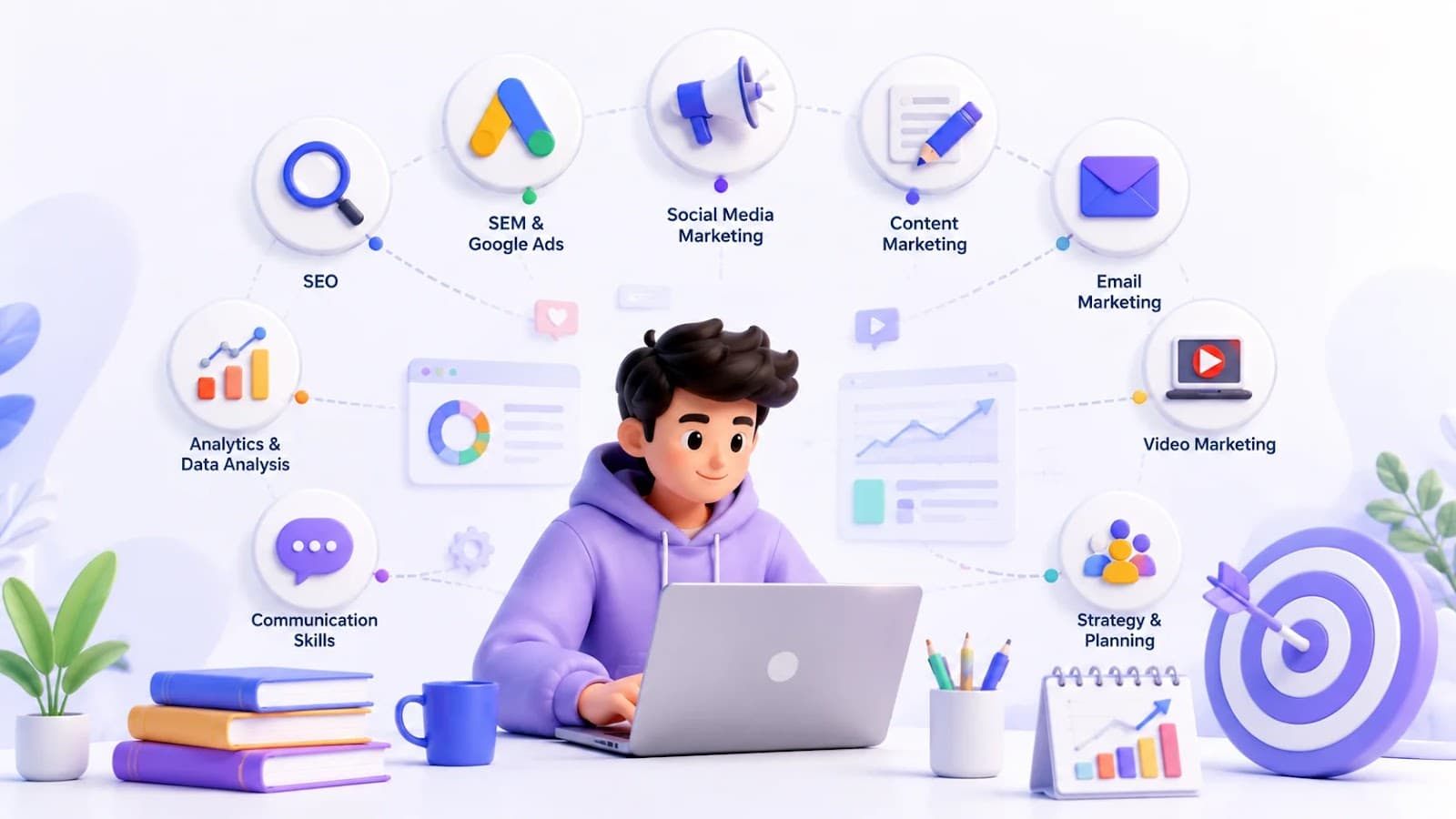
Explore the top 10 Digital Marketing Skills every student should master, from SEO and Google Ads to AI tools, to build a successful Marketing Skills portfolio and career.