
Loading
 ← Back to blogs
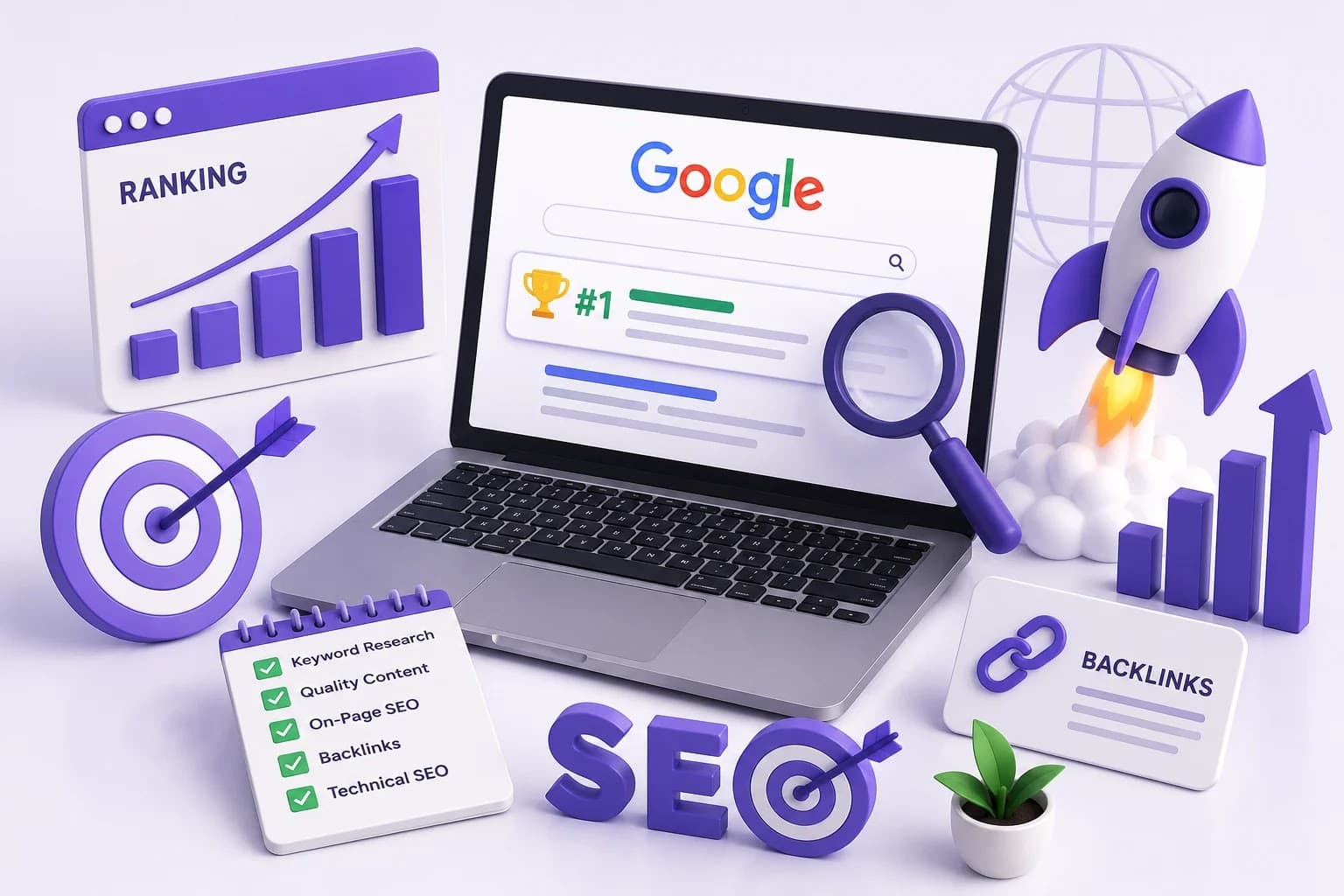
Learn how to rank a new website on Google with proven SEO strategies, keyword research, technical optimization, and content tips for long-term growth.
Launching a new website is exciting, but getting it to appear on Google's first page takes time, planning, and consistent SEO efforts. Many beginners believe that simply publishing a website is enough, but in reality, Google evaluates hundreds of ranking factors before deciding where a page should appear in search results.
The good news is that you don't need a huge budget to rank a new website. By following proven SEO strategies, creating valuable content, and optimizing your website correctly, you can steadily increase your visibility and attract organic traffic.
In this guide, you'll learn step-by-step how to rank a new website on Google in 2026.
Google doesn't instantly trust new websites.
A new website has:
Google first needs to discover, crawl, index, and evaluate your website before it begins ranking your pages.
This process takes time, especially in competitive industries.
Keyword research is the foundation of SEO.
Instead of targeting highly competitive keywords like:
Target long-tail keywords such as:
Long-tail keywords have lower competition and are easier for new websites to rank.
Every Google search has a purpose.
The four main types of search intent are:
Users want information.
Example:
"What is SEO?"
Users want a specific website.
Example:
"Google Search Console"
Users compare options.
Example:
"Best SEO Tools"
Users are ready to take action.
Example:
"Enroll in SEO Course"
Create content that matches the user's intent.
Content remains one of Google's strongest ranking signals.
Every article should:
Focus on solving problems rather than simply targeting keywords.
Instead of publishing random articles, cover an entire subject in depth.
For example, if your niche is SEO, create articles about:
This helps search engines recognize your website as a reliable source of information on that topic.
Every page should include:
Keep your content organized and easy to navigate.
Technical SEO helps search engines crawl and index your website.
Important tasks include:
A technically sound website provides a strong foundation for rankings.
Google Search Console helps you:
After publishing a new page:
This helps Google discover your content more quickly.
A sitemap lists the important pages on your website.
Example:
https://yourwebsite.com/sitemap.xml
Submit your sitemap in Google Search Console to help search engines crawl your website efficiently.
Fast websites provide a better user experience and often perform better in search.
Improve speed by:
Regularly test your site using performance tools.
Google uses mobile-first indexing.
Your website should:
A responsive design is essential.
Internal links connect related pages within your website.
For example:
A page about "Technical SEO" can link to:
Internal links help users navigate your site and help search engines understand your content structure.
Backlinks remain one of the strongest ranking factors.
Earn backlinks by:
Avoid buying links or using spammy link-building tactics.
Every image should have:
Optimized images improve page speed and accessibility.
Google prefers active websites.
Instead of publishing many articles at once and stopping, create a consistent publishing schedule.
Example:
Consistency helps build authority over time.
SEO is an ongoing process.
Regularly update:
Refreshing content helps maintain relevance and can improve rankings.
Track your website using:
Monitor:
Use this data to refine your SEO strategy.
Many new website owners make these mistakes:
Avoiding these mistakes helps build a stronger SEO foundation.
SEO is a long-term investment.
The timeline depends on:
Some pages may begin appearing in search results within weeks, while competitive keywords can take several months or longer to achieve strong rankings.
Focus on consistent improvement rather than quick results.
✔ Choose low-competition keywords
✔ Understand search intent
✔ Publish high-quality content
✔ Optimize titles and meta descriptions
✔ Create SEO-friendly URLs
✔ Submit an XML Sitemap
✔ Verify Google Search Console
✔ Request indexing
✔ Improve website speed
✔ Make your site mobile-friendly
✔ Add internal links
✔ Earn quality backlinks
✔ Update content regularly
✔ Monitor website performance
✔ Be patient and consistent
Useful SEO tools include:
These tools help you identify opportunities, monitor progress, and improve your SEO strategy.
It varies. After submitting your sitemap and requesting indexing in Google Search Console, pages may be discovered relatively quickly, but full indexing and ranking depend on several factors.
Yes. High-quality content targeting low-competition keywords can rank without many backlinks, especially in less competitive niches. However, earning relevant backlinks can strengthen your site's authority over time.
Consistency is more important than quantity. Publishing valuable content regularly helps build topical authority and keeps your website active.
Yes. Faster websites generally provide a better user experience, and page performance is an important part of modern SEO.
Many SEO activities—such as creating content, optimizing pages, and using Google Search Console—are free. Some advanced tools offer paid features, but they are not required to get started.
Ranking a new website on Google takes time, but it's achievable with a clear strategy and consistent effort. Focus on creating helpful content, targeting the right keywords, optimizing your website technically, and building a strong internal linking structure.
Remember that SEO is not about shortcuts or quick wins. Sustainable success comes from providing value to your audience, maintaining a technically healthy website, and continually improving your content based on user needs and search performance.
If you stay consistent and follow SEO best practices, your website can steadily build authority and attract long-term organic traffic.

Learn what Digital Marketing is, its types, benefits, career opportunities, AI trends, and why it's one of the most in-demand skills for students and professionals in 2026.

Discover the benefits of learning Digital Marketing after college, explore career opportunities, essential skills, freelancing, and how to build a successful Digital Marketing Career.
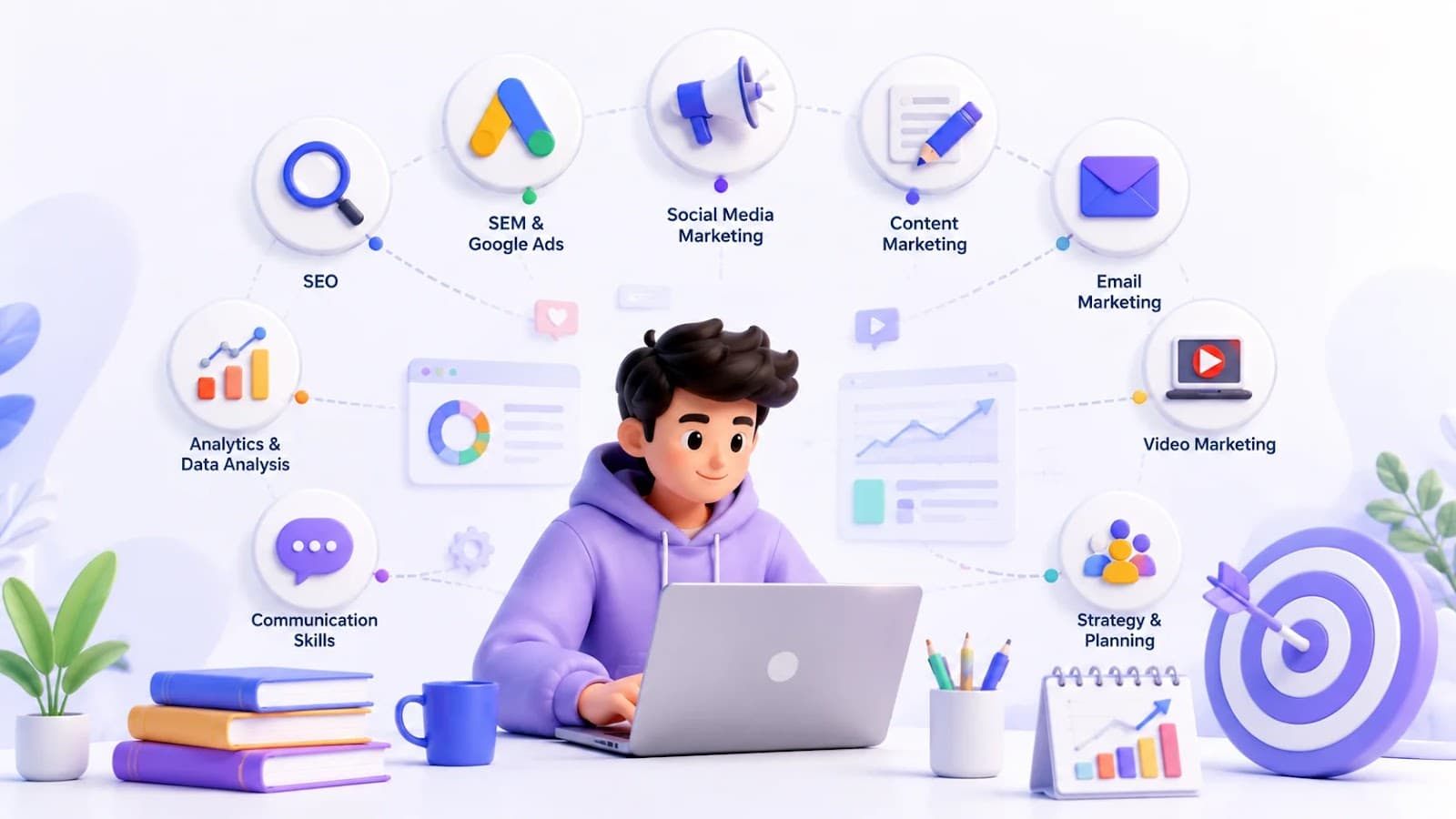
Explore the top 10 Digital Marketing Skills every student should master, from SEO and Google Ads to AI tools, to build a successful Marketing Skills portfolio and career.