
Loading
 ← Back to blogs
Learn how Search Engines work, how Google Search crawls, indexes, and ranks websites, and discover the key factors that influence search engine rankings.
Every day, billions of people use Search Engines to find information, products, services, and answers to their questions. Whether you're searching for the nearest restaurant, a digital marketing course, or the latest news, search engines help you discover the most relevant results within seconds.
Among all search engines, Google Search is the most widely used, processing billions of searches every day. But have you ever wondered how search engines find websites and decide which pages appear first?
Understanding how search engines work is one of the first steps in learning SEO. In this guide, we'll explain the process in simple terms, including crawling, indexing, ranking, and the factors that influence search results.
Search Engines are online platforms that help users find information on the internet by searching through billions of web pages.
When a user enters a search query, the search engine analyzes its database and displays the most relevant results.
Popular search engines include:
Among these, Google Search holds the largest share of the global search market.
Search engines connect users with the information they need quickly and efficiently.
They help people:
For businesses, appearing in search results increases visibility, website traffic, leads, and sales.
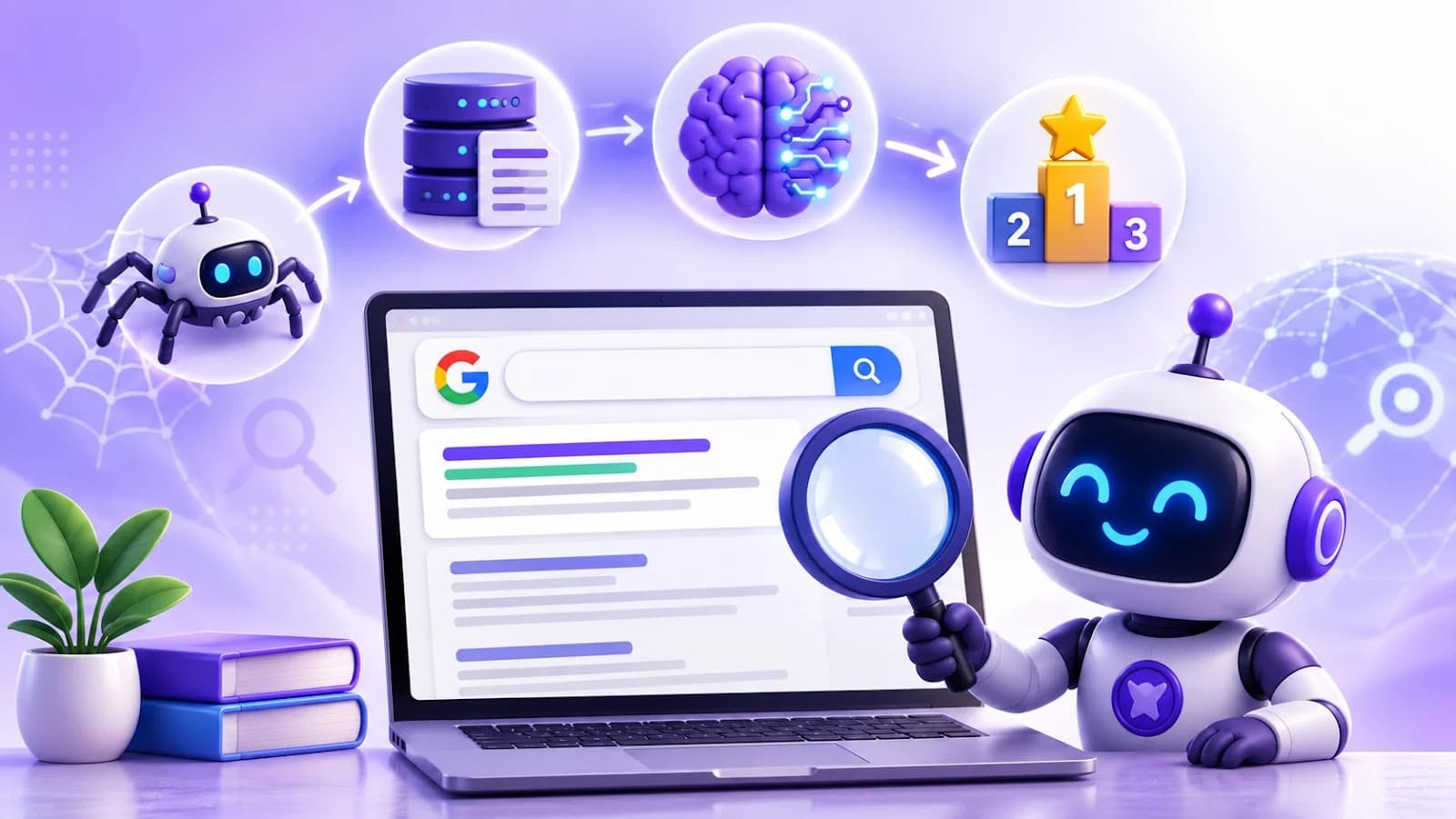
Search engines perform three main tasks to deliver relevant search results:
Let's understand each step in detail.
Crawling is the process where search engines discover new and updated web pages.
Search engines use automated programs called web crawlers, spiders, or bots.
Google's crawler is known as Googlebot.
Googlebot continuously visits websites and follows links to discover:
If a page cannot be crawled, it cannot appear in search results.
After crawling a webpage, search engines analyze its content and store it in a massive database called the index.
During indexing, Google examines:
Indexed pages become eligible to appear in search results.
However, not every crawled page gets indexed if it lacks quality or has technical issues.
When someone performs a search, Google compares millions of indexed pages and decides which results are most relevant.
This process is called ranking.
Google uses hundreds of ranking signals to determine the order of search results.
The goal is to provide users with the most accurate, useful, and trustworthy information.
Google considers many factors before ranking a webpage.
Some of the most important include:
High-quality, original, and helpful content has a better chance of ranking well.
Content should answer users' questions clearly and provide real value.
Google analyzes whether the content matches the user's search intent.
Using relevant keywords naturally throughout your content helps search engines understand the topic.
Search engines prefer websites that offer an excellent user experience.
Important UX factors include:
Fast-loading websites improve user satisfaction and are more likely to rank higher.
Slow websites may experience higher bounce rates and lower rankings.
Since most searches happen on mobile devices, Google uses mobile-first indexing.
Websites should work well on smartphones and tablets.
Backlinks are links from other websites pointing to your content.
Quality backlinks act as trust signals and can improve rankings.
Secure websites using HTTPS are preferred over unsecured HTTP websites.
Security helps protect users and builds trust.
Regularly updating content keeps it relevant and improves its chances of ranking well, especially for topics that change frequently.
When you type a search query into Google:
All of this happens in just a fraction of a second.
Google Search displays two main types of results.
Organic results appear naturally based on SEO and content quality.
Businesses do not pay for these rankings.
Benefits include:
Paid results appear through Google Ads.
Businesses pay when users click on their advertisements (Pay-Per-Click).
Paid ads provide immediate visibility at the top of search results.
Learning how search engines work helps you create content that is easier for Google to understand and rank.
It also helps you:
Understanding Google's ranking process is the foundation of successful SEO.
To improve your website's visibility:
Following these best practices makes it easier for search engines to crawl, index, and rank your website.
Avoid these common mistakes:
Fixing these issues improves your website's SEO performance.
SEO professionals use various tools to monitor website performance.
Popular tools include:
These tools provide valuable insights into website health and search visibility.
Search technology continues to evolve rapidly.
Emerging trends include:
Businesses and marketers who stay updated with these changes will remain competitive in search rankings.
Search engines are online platforms that help users find information by searching and organizing billions of web pages across the internet.
Google Search works through three main steps: crawling websites, indexing web pages, and ranking the most relevant content for each search query.
Crawling is the process where Googlebot discovers new and updated web pages by following links across the internet.
Indexing allows search engines to store web pages in their database so they can appear in search results when users search for relevant topics.
Factors such as high-quality content, keyword relevance, backlinks, website speed, mobile friendliness, user experience, and technical SEO all influence Google rankings.
Understanding how Search Engines work is the foundation of successful SEO. Every search result you see on Google Search is the outcome of a complex process involving crawling, indexing, and ranking. By learning how search engines evaluate websites, you can create content that is easier to discover, more relevant to users, and better optimized for search visibility.
Whether you're a student, business owner, or aspiring digital marketer, mastering the basics of search engines will help you improve website performance, attract more organic traffic, and build a strong online presence. As search technology continues to evolve with AI and user-focused algorithms, staying updated with SEO best practices will be essential for long-term digital success.

Learn what Digital Marketing is, its types, benefits, career opportunities, AI trends, and why it's one of the most in-demand skills for students and professionals in 2026.

Discover the benefits of learning Digital Marketing after college, explore career opportunities, essential skills, freelancing, and how to build a successful Digital Marketing Career.

Explore the top 10 Digital Marketing Skills every student should master, from SEO and Google Ads to AI tools, to build a successful Marketing Skills portfolio and career.