
Loading
 ← Back to blogs
Learn how PPC advertising works, including keywords, bidding, ad auctions, landing pages, conversion tracking, and strategies for successful campaigns
Pay-Per-Click (PPC) advertising is one of the most effective digital marketing strategies for driving targeted traffic, generating leads, and increasing sales. Unlike traditional advertising, where businesses pay upfront regardless of results, PPC allows advertisers to pay only when someone clicks on their advertisement.
PPC advertising is used by businesses of all sizes—from local shops and startups to global brands. Platforms such as Google Ads, Microsoft Advertising, Meta Ads, and LinkedIn Ads offer PPC solutions tailored to different marketing goals.
In this beginner-friendly guide, you'll learn what PPC advertising is, how it works, its advantages, key components, bidding process, and best practices for running successful campaigns.
PPC (Pay-Per-Click) is an online advertising model where advertisers pay a fee each time a user clicks on their ad.
Instead of earning website visitors organically through search engine optimization (SEO), businesses can buy targeted traffic through paid advertisements.
The goal of PPC is to attract users who are interested in your products or services and encourage them to take a desired action.
PPC advertising helps businesses:
PPC is especially valuable for businesses that need immediate visibility in search results or social media.
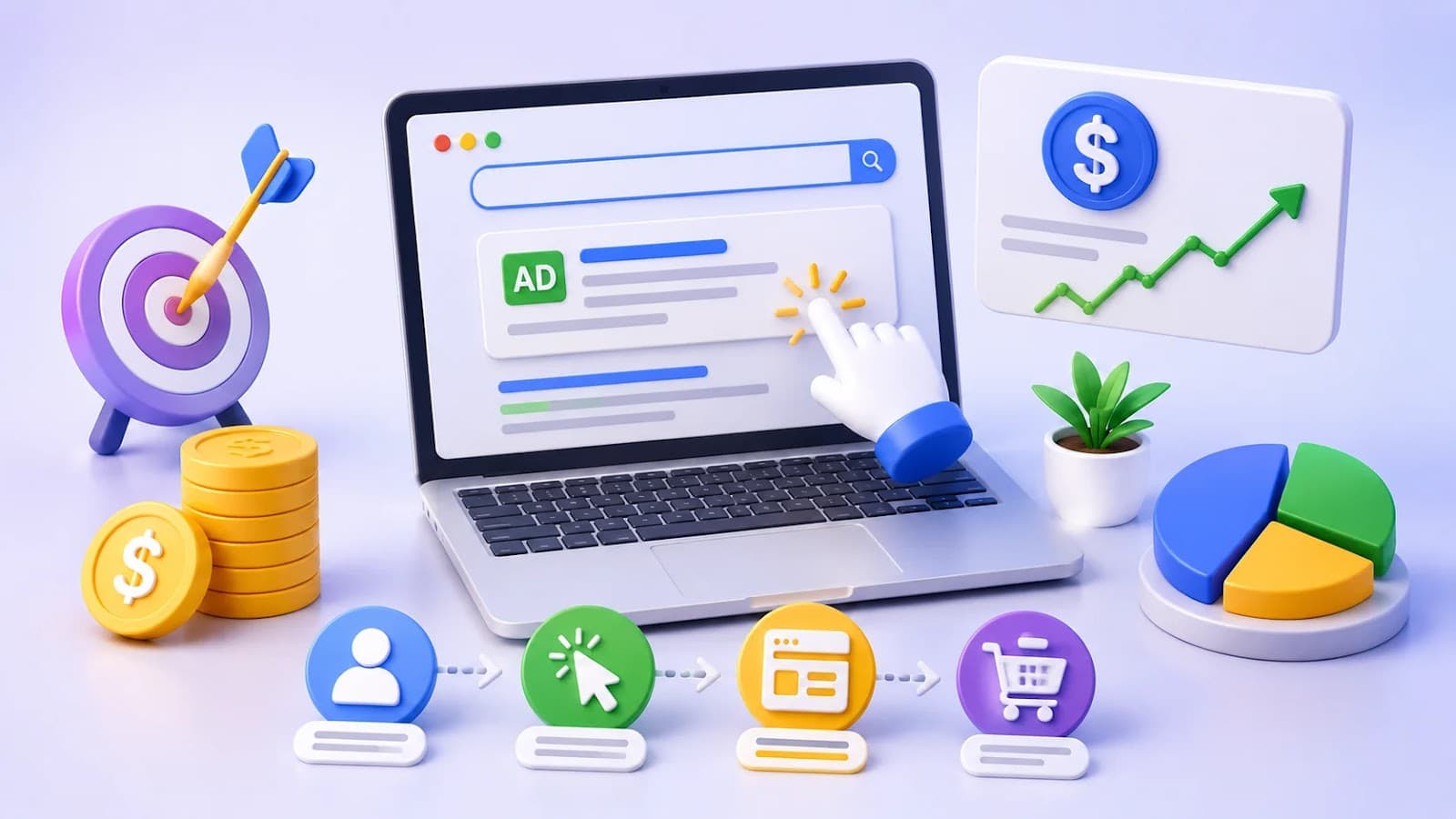
The PPC process typically follows these steps:
Choose an advertising platform such as:
Select a campaign objective based on your business goals.
Depending on the platform:
For example:
Keyword:
Digital Marketing Course
Audience:
People interested in digital marketing and online education.
Your ad may include:
The creative should clearly communicate your value proposition.
Choose:
You maintain control over how much you're willing to spend.
Whenever someone performs a search or matches your targeting criteria, the advertising platform runs an auction.
Factors influencing the outcome include:
The winning ads are shown to users.
When a user clicks your advertisement:
If nobody clicks your ad, you generally do not pay for a click.
After arriving on your website, users may:
These actions are called conversions.
PPC advertisements can appear on:
Placement depends on the platform and campaign type.
Successful PPC campaigns include:
Words or phrases users search for.
Example:
Your marketing message includes:
Relevant ads improve click-through rates.
The page users visit after clicking your ad.
A good landing page should:
Your maximum advertising spend.
Budget control helps manage costs while achieving campaign goals.
The maximum amount you're willing to pay for a click, conversion, or impression, depending on your bidding strategy.
Every eligible ad enters an auction when a user performs a relevant search or action.
The platform evaluates factors such as:
This means advertisers with highly relevant ads can often compete effectively without always having the highest bid.
You pay when someone clicks your advertisement.
Best for:
You pay for every 1,000 ad impressions.
Best for:
You pay based on conversions or optimize campaigns toward a target acquisition cost.
Best for:
Used mainly for video advertising.
Charges apply when users watch or interact with your video according to the platform's billing rules.
PPC | SEO |
Paid traffic | Organic traffic |
Immediate visibility | Long-term growth |
Budget required | Time and content investment required |
Results begin after campaign launch | Results build gradually |
Stops when ads stop | Can continue generating traffic over time |
Many businesses use both PPC and SEO together for balanced digital marketing.
PPC offers many benefits:
Some common challenges include:
Understanding these challenges helps improve long-term performance.
Avoid these mistakes:
Continuous testing and refinement lead to better results.
Monitor important metrics such as:
These metrics help evaluate campaign success and identify optimization opportunities.
✔ Define campaign objectives
✔ Research keywords or audiences
✔ Create compelling advertisements
✔ Optimize landing pages
✔ Set a realistic budget
✔ Configure conversion tracking
✔ Choose an appropriate bidding strategy
✔ Monitor campaign performance
✔ Test different creatives and copy
✔ Optimize campaigns regularly
PPC (Pay-Per-Click) advertising is an online advertising model where businesses pay when users click on their advertisements.
Popular PPC platforms include Google Ads, Microsoft Advertising, Meta Ads, LinkedIn Ads, and several other advertising networks.
They serve different purposes. PPC provides immediate visibility and traffic, while SEO focuses on building long-term organic visibility. Many businesses use both together.
Costs vary based on factors such as industry, competition, targeting, bidding strategy, and keyword demand. You can control spending by setting campaign budgets.
Yes. PPC campaigns can be launched with flexible budgets, making them suitable for startups, local businesses, and small companies.
PPC advertising is a powerful digital marketing strategy that enables businesses to reach potential customers quickly and efficiently. By paying only when users interact with your ads, you can attract targeted traffic, generate leads, and increase sales while maintaining control over your advertising budget.
Success with PPC depends on choosing the right keywords or audiences, creating compelling ads, optimizing landing pages, tracking conversions, and continually improving campaigns based on performance data. When combined with SEO and other marketing channels, PPC becomes an effective part of a comprehensive digital marketing strategy.
Learn what Digital Marketing is, its types, benefits, career opportunities, AI trends, and why it's one of the most in-demand skills for students and professionals in 2026.
Discover the benefits of learning Digital Marketing after college, explore career opportunities, essential skills, freelancing, and how to build a successful Digital Marketing Career.
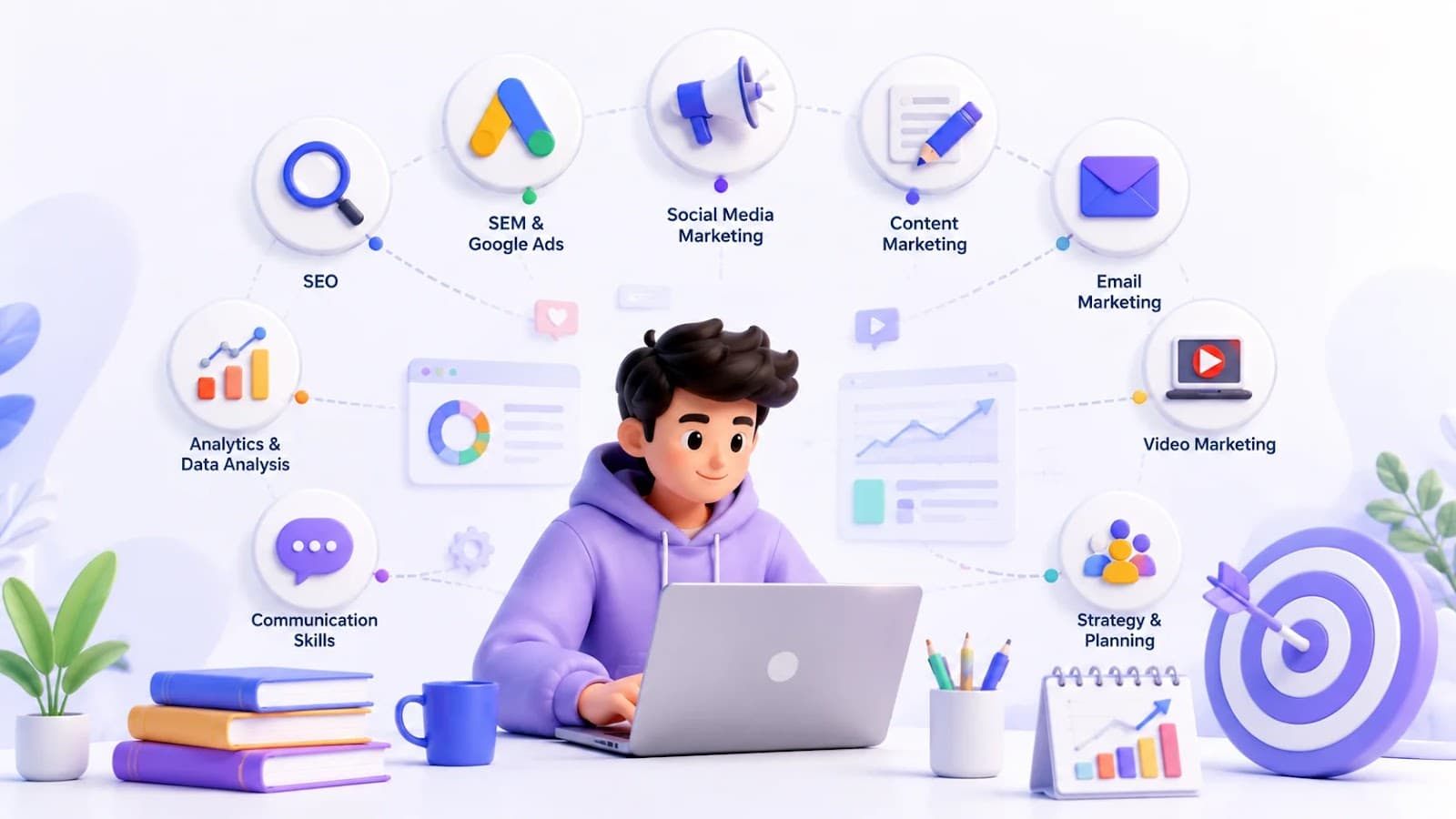
Explore the top 10 Digital Marketing Skills every student should master, from SEO and Google Ads to AI tools, to build a successful Marketing Skills portfolio and career.