
Loading
 ← Back to blogs
Learn how to build an e-commerce digital marketing strategy with SEO, social media, email marketing, paid ads, and conversion optimization.
Starting an online store is easier than ever, but attracting customers and generating consistent sales requires more than simply listing products on a website. Businesses need a clear marketing strategy to reach the right audience, build trust, and encourage visitors to make purchases.
An effective e-commerce digital marketing strategy combines search engine optimization (SEO), social media marketing, paid advertising, email marketing, content creation, and conversion rate optimization to support online business growth.
For beginners, understanding how these channels work together can make digital marketing more manageable and measurable. Whether you are launching a new online store or trying to improve an existing one, a structured approach helps you focus on the activities most relevant to your business goals.
In this guide, we will explore the essential components of an e-commerce marketing strategy, how to implement them step by step, common mistakes to avoid, and the metrics you should track.
An e-commerce digital marketing strategy is a planned approach to promoting products or services through digital channels to attract potential customers, increase sales, and build long-term customer relationships.
It involves identifying the target audience, selecting suitable marketing channels, creating relevant content, and measuring campaign performance.
For example, an online clothing store might use SEO to attract people searching for specific products, Instagram to showcase new collections, paid advertisements to reach potential buyers, and email marketing to encourage repeat purchases.
Rather than treating every marketing channel separately, an effective strategy connects them to a common business objective.
Traditional marketing often relies on channels such as print advertisements, billboards, and television commercials. E-commerce digital marketing uses online channels that allow businesses to reach specific audiences and measure many interactions more directly.
Digital marketing can help online stores understand customer behaviour, test promotional ideas, and adjust campaigns based on performance.
However, the most suitable approach depends on the products, audience, budget, and business objectives.
Digital marketing plays an important role in helping online stores compete, attract customers, and generate sales.
SEO, social media, and online advertising can help potential customers discover a store when they search for products or explore relevant content.
Greater visibility among relevant audiences can create more opportunities for product discovery and sales.
Digital platforms offer targeting options that can help businesses reach people based on factors such as interests, search behaviour, location, and previous interactions, depending on the platform.
Relevant targeting can make campaigns more focused and help businesses use their marketing budgets more effectively.
Consistent branding, helpful product information, genuine customer reviews, and useful content can help customers understand a business before purchasing.
Trust is particularly important for online stores because customers often cannot physically inspect products before placing an order.
A well-planned strategy guides customers from product discovery to purchase.
Clear product descriptions, useful images, transparent pricing, and a simple checkout process can reduce friction during the buying journey.
Email campaigns, relevant product recommendations, loyalty programmes, and customer support can help businesses maintain relationships with existing customers.
Repeat purchases may contribute to long-term business growth when the products and customer experience meet expectations.
Digital marketing analytics can help businesses evaluate traffic, advertising costs, sales, conversion rates, and customer engagement.
These insights allow marketers to identify successful activities and areas that need improvement.
A strong e-commerce strategy combines several marketing channels. The right mix depends on your audience, product category, resources, and business goals.
E-commerce SEO helps product pages, category pages, and useful content appear in relevant search results.
Important activities include:
For example, a store selling handmade skincare products might optimize category pages for relevant searches such as handmade soaps or natural skincare products.
SEO generally requires consistent effort and may take time to produce meaningful results.
Social media platforms help e-commerce brands showcase products, communicate with customers, and build communities.
Depending on the target audience, a store might use Instagram, Facebook, Pinterest, YouTube, or other relevant platforms.
Useful content formats include:
Focus on creating useful, engaging content rather than publishing promotional posts without a clear purpose.
Paid advertising can help online stores reach potential customers more quickly than relying entirely on organic discovery.
Common options include search advertising, shopping advertisements, social media ads, and retargeting campaigns where supported and appropriate.
Before launching a campaign, define your objective, audience, budget, creative approach, and conversion tracking.
Start with a manageable budget and evaluate whether the campaign generates profitable sales or valuable customer actions.
Email marketing allows businesses to communicate with customers who have voluntarily subscribed or otherwise provided a valid basis for receiving marketing communications.
Useful e-commerce email campaigns include:
Segmenting subscribers by relevant preferences or purchase behaviour can help make messages more useful.
Follow applicable privacy and email marketing requirements, and provide clear unsubscribe options.
Content marketing helps businesses attract and educate potential customers through useful information.
For e-commerce websites, content can include buying guides, product comparisons, tutorials, frequently asked questions, and articles about common customer problems.
For example, a fitness equipment store could publish a guide to choosing resistance bands for home workouts and link to relevant product categories.
Useful content can support organic visibility, answer purchasing questions, and help customers make informed decisions.
Conversion rate optimization focuses on improving the percentage of website visitors who complete a desired action.
For an online store, this might mean completing a purchase, adding an item to the cart, or subscribing to a newsletter.
Practical improvements include:
Measure the results of changes instead of assuming that a new design will automatically improve conversions.
Customer reviews can help potential buyers understand product quality and the purchasing experience.
Encourage genuine feedback, respond professionally to concerns, and avoid misleading reviews or unsupported product claims.
Authentic customer feedback can also reveal opportunities to improve products, descriptions, and customer service.
Beginners can use the following steps to build a practical marketing plan.
Start by identifying what you want your marketing efforts to achieve.
Possible goals include:
Set measurable targets with a defined timeframe so that you can evaluate progress.
Understand who is most likely to buy your products.
Consider customer needs, purchasing motivations, common problems, budget, location, and preferred shopping channels.
Use customer feedback, sales data, website analytics, and market research to develop a realistic audience profile.
Avoid assuming that every product is suitable for every customer.
Study relevant competitors to understand how they present products, organize categories, communicate value, and promote offers.
Keyword research can help identify the terms potential customers use when searching for products and solutions.
Organize keywords according to search intent, such as:
Use the findings to guide product pages, category pages, advertising campaigns, and supporting content.
Select channels based on your audience, budget, products, and goals.
For example, a visually appealing fashion brand may benefit from social media content, while a specialist equipment store may prioritize search visibility and detailed product pages.
You do not need to invest in every channel immediately. Start with the channels most likely to reach your intended audience and measure their performance.
Before investing heavily in advertising, make sure your website provides a reliable shopping experience.
Check that product pages contain accurate descriptions, clear prices, relevant images, and useful delivery information.
Test the complete purchasing journey on mobile and desktop, including product selection, cart updates, payment, and order confirmation.
Plan what you will publish and promote throughout the month.
Your calendar might include product demonstrations, educational articles, social media posts, promotional emails, and seasonal campaigns.
Align content with customer needs and relevant business events rather than relying only on discounts to generate sales.
Track the actions that matter to your business.
Depending on your setup, these might include product views, add-to-cart events, checkout starts, purchases, and revenue.
Use suitable analytics and advertising tools, verify that events are recorded correctly, and follow applicable privacy requirements.
Review performance regularly and identify where improvements may be needed.
For example, high product-page traffic with few purchases may justify investigating product information, pricing, delivery costs, or checkout usability.
Use controlled experiments when appropriate, document the results, and prioritize changes based on evidence.
If you are starting with limited resources, focus on practical activities that establish a strong foundation.
Create unique, informative product descriptions that explain features, benefits, sizing, specifications, and other relevant details.
Use clear product images and answer common purchasing questions.
Avoid copying manufacturers' descriptions across multiple pages when original, useful content can be provided.
Long-tail keywords are more specific search phrases that often reveal a clearer customer need.
For example, instead of targeting only a broad term such as "shoes," a store might create relevant content around "lightweight running shoes for beginners."
Choose keywords that genuinely match your products and customers rather than forcing unrelated terms into the content.
Demonstrate how products work, answer common questions, and share practical advice relevant to your audience.
Use a consistent visual style and a clear next step when promoting a product.
Review engagement and sales outcomes to understand which formats are most useful.
Offer useful updates, product information, or other relevant incentives to people who choose to subscribe.
Send messages that provide value, maintain an appropriate frequency, and respect subscriber preferences.
A permission-based email list can become a useful channel for customer retention.
Start with a clear campaign objective and a budget you can afford to spend.
Test relevant audiences and creative variations while tracking the actions that matter to your business.
Do not judge a campaign only by clicks. Consider conversion rates, customer acquisition costs, order value, and profitability.
Review whether customers can understand the total cost, delivery options, payment methods, and return conditions before completing an order.
Remove unnecessary steps where possible and make error messages easy to understand.
Monitor checkout abandonment to identify potential friction points.
Use relevant follow-up communications, helpful product recommendations, and reliable customer service to encourage ongoing relationships.
Any loyalty offer should make commercial sense and provide genuine value to customers.
Broad campaigns may attract visitors who have little interest in your products.
Use audience research, relevant keywords, and campaign data to improve targeting.
Many customers browse and shop on mobile devices.
Test page layouts, navigation, image display, and checkout functionality on different screen sizes.
Paid campaigns can provide visibility, but relying exclusively on advertising may make growth dependent on ongoing spending.
Develop suitable organic channels, customer relationships, and useful content alongside paid campaigns.
Incomplete or confusing descriptions can leave buyers uncertain about what they are purchasing.
Provide accurate information, clear images, and relevant answers to common questions.
Without reliable tracking, businesses may struggle to understand which marketing activities contribute to sales.
Establish meaningful metrics and check the accuracy of your data before making major decisions.
Frequent discounts may reduce profit margins and encourage customers to wait for promotions.
Evaluate the financial impact of offers and consider other ways to communicate product value.
Marketing should not stop when a customer completes a purchase.
Reliable fulfilment, customer support, relevant follow-up communications, and useful product information can support retention.
The right tools depend on your platform, budget, and business requirements.
Helps measure website activity, traffic sources, and configured e-commerce events.
Provides information about organic search performance, search queries, clicks, impressions, and indexing issues.
Supports paid search and other advertising campaigns, depending on available campaign formats.
Helps manage supported Facebook and Instagram business activities, including content publishing and performance insights.
Email marketing tools can support subscriber management, campaign creation, automation, and performance reporting.
Keyword research and SEO tools can help businesses evaluate search opportunities, inspect website performance, and identify optimization ideas.
Use your store platform's reporting features alongside suitable analytics tools to understand orders, revenue, product performance, and customer behaviour.
Choose tools based on the decisions you need to make instead of paying for features your business does not currently require.
Tracking the right metrics helps you understand whether your marketing strategy is contributing to business goals.
Measure visits and relevant traffic sources to understand how people discover your store.
Traffic growth is useful, but it should be considered alongside visitor quality and sales performance.
Calculate the percentage of visitors or sessions that result in a purchase using a consistent measurement definition.
Compare performance across relevant time periods and traffic sources.
Customer acquisition cost (CAC) measures the cost of acquiring customers according to a defined calculation.
Specify which marketing and sales costs are included, and compare CAC with customer value to assess commercial sustainability.
Average order value (AOV) measures the average revenue generated per order.
Track it consistently and consider whether promotions, product bundles, or recommendations improve order value without harming profitability.
Return on advertising spend (ROAS) compares attributed advertising revenue with advertising spend.
A high ROAS does not automatically mean a campaign is profitable because product costs, fulfilment, overheads, and other expenses may also matter.
Monitor repeat purchase rates and other relevant retention measures to understand whether customers return over time.
Use the findings to evaluate customer experience and retention initiatives.
Review relevant metrics such as email clicks, social media engagement, referral traffic, and conversions.
Choose metrics that connect to your campaign objectives instead of relying on vanity metrics alone.
It is a plan for promoting an online store through channels such as SEO, social media, paid advertising, email marketing, and content marketing to attract customers and generate sales.
Start with a well-optimized online store, relevant product and category keywords, useful social media content, and reliable analytics. Add paid advertising or email automation based on your goals, budget, and audience.
E-commerce SEO helps search engines understand product and category pages and can improve their visibility for relevant searches. Useful content and technically sound pages can support long-term organic discovery.
Social media can help online stores introduce products, engage with audiences, answer questions, and direct interested people to product pages. Its value depends on the audience and the platform's suitability.
There is no universal budget. Consider your available resources, product margins, customer acquisition costs, and business goals. Start with a manageable amount and evaluate performance before increasing spending.
The timeline varies by channel. Paid campaigns can generate traffic soon after launch, while SEO and organic content often require sustained effort. Results also depend on competition, website quality, products, and budget.
SEO focuses on improving organic visibility in search results, while paid advertising uses a budget to promote products or offers through advertising platforms. Businesses can use both approaches as part of a broader strategy.
A store can improve retention through reliable customer service, quality products, relevant email communication, useful recommendations, and appropriate loyalty programmes.
Important metrics may include website traffic, purchase conversion rate, customer acquisition cost, average order value, advertising return, revenue, and repeat purchase rate.
Small businesses can focus on specific customer needs, distinctive products, helpful content, relevant niche keywords, and strong customer service. Results depend on market conditions and the business's ability to deliver value consistently.
A successful e-commerce digital marketing strategy brings together the right audience, relevant content, effective marketing channels, and a reliable shopping experience.
For beginners, the most practical approach is to establish clear business goals, optimize product pages, build organic visibility, create useful social media content, and measure performance consistently. Paid advertising and email marketing can then support customer acquisition and retention when they fit the business's needs.
Digital marketing is an ongoing process. Review your results, learn from customer behaviour, and improve your strategy as your store grows.
Understanding SEO, paid advertising, content marketing, analytics, and conversion optimization can help you plan and evaluate e-commerce marketing campaigns more effectively.
Explore Hirloye Academy's digital marketing learning resources to strengthen your knowledge and build practical marketing skills.
Visit the Hirloye Academy blog for more digital marketing guides and resources.

Learn what Digital Marketing is, its types, benefits, career opportunities, AI trends, and why it's one of the most in-demand skills for students and professionals in 2026.

Discover the benefits of learning Digital Marketing after college, explore career opportunities, essential skills, freelancing, and how to build a successful Digital Marketing Career.
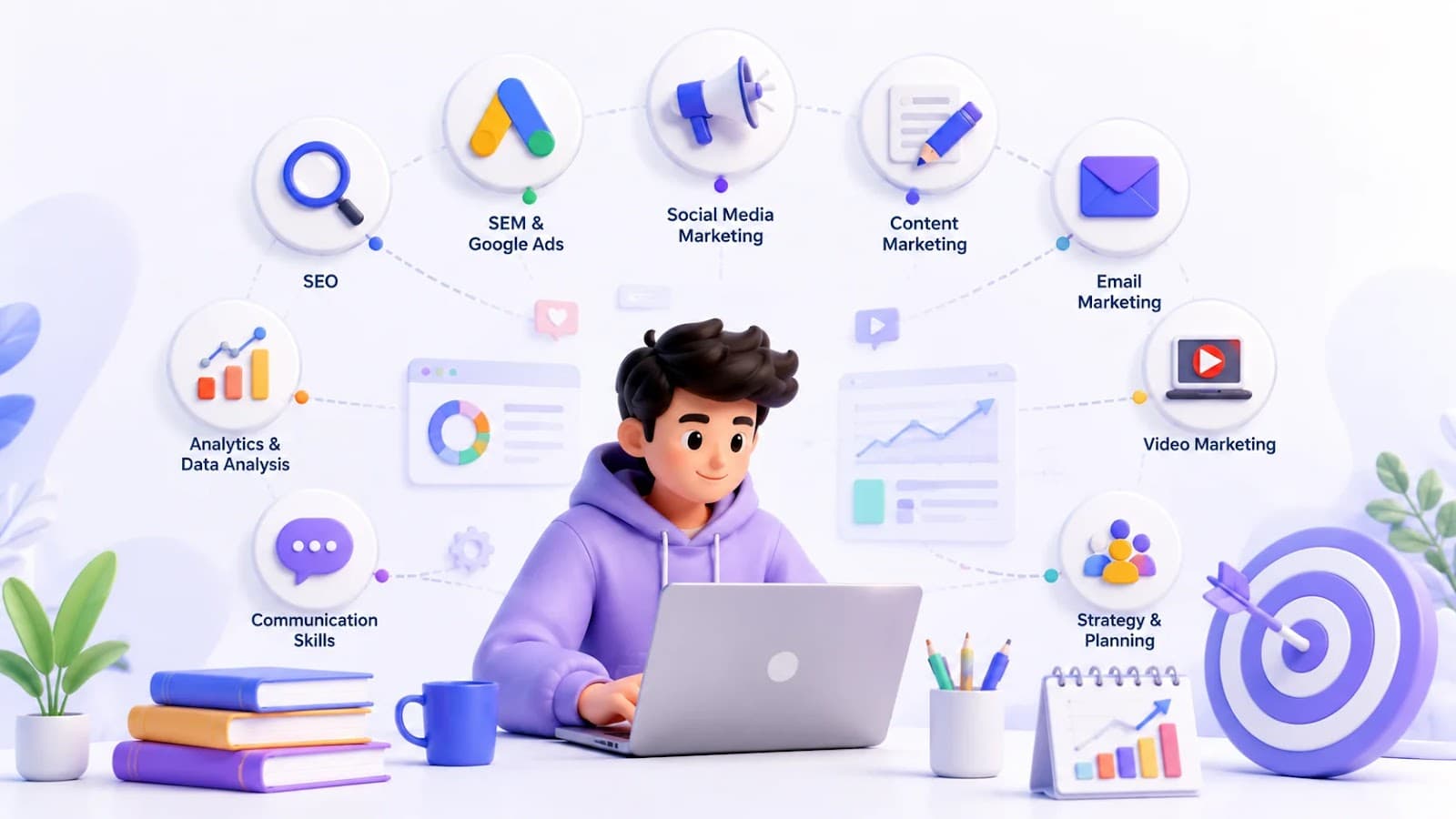
Explore the top 10 Digital Marketing Skills every student should master, from SEO and Google Ads to AI tools, to build a successful Marketing Skills portfolio and career.