
Loading
 ← Back to blogs
Learn the most common Google Ads mistakes, why campaigns fail, and how to improve targeting, conversions, Quality Score, and overall ad performance.
Google Ads is one of the most powerful digital advertising platforms available today. It allows businesses to reach potential customers, generate leads, and increase sales almost instantly. However, simply creating a campaign doesn't guarantee success.
Many advertisers lose money because of avoidable mistakes such as targeting the wrong audience, choosing poor keywords, ignoring conversion tracking, or sending visitors to ineffective landing pages.
The good news is that most Google Ads mistakes can be identified and corrected with proper planning and regular optimization.
In this guide, you'll learn the most common Google Ads mistakes beginners and businesses make, why they happen, and how to avoid them.
Google Ads campaigns usually fail because of poor strategy rather than the platform itself.
Common reasons include:
Understanding these issues helps you create campaigns that deliver better results.
Many beginners select the wrong campaign objective.
Examples include:
Your campaign objective tells Google's AI how to optimize your ads.
Solution
Choose an objective that matches your business goal, such as:
Broad keywords may attract irrelevant traffic.
Example:
Keyword:
Digital Marketing
Your ad might appear for searches unrelated to your business.
Solution
Use a combination of:
Review keyword performance regularly.
Without negative keywords, your advertisements may appear for irrelevant searches.
Example:
If you sell premium courses, you may want to exclude searches containing:
Solution
Regularly review the Search Terms Report and add negative keywords to improve targeting.
Many advertisements fail because they don't explain why users should click.
Poor ads often:
Solution
Include:
Example CTA:
Many advertisers send visitors to their homepage.
Homepages often contain:
Solution
Create dedicated landing pages that match your advertisement and focus on one conversion goal.
A poor landing page reduces conversions and may affect your campaign performance.
Common problems include:
Solution
Build landing pages that are:
Without conversion tracking, you won't know which campaigns generate results.
You cannot accurately measure:
Solution
Install Google Ads Conversion Tracking or import conversions from Google Analytics 4 before launching campaigns.
Different goals require different bidding strategies.
Examples:
Using the wrong strategy can reduce campaign performance.
Many beginners focus only on bids.
Google also evaluates:
Ignoring Quality Score may lead to higher advertising costs.
Solution
Improve:
Placing unrelated keywords in one ad group makes it difficult to create relevant ads.
Example:
One ad group containing:
Solution
Create separate ad groups for closely related keywords.
Using only one advertisement limits your ability to improve performance.
Solution
Create multiple ad variations.
Test:
Pause underperforming ads and improve successful ones.
Many visitors come from smartphones.
A poor mobile experience can reduce conversions.
Solution
Ensure your website:
A very small budget may not generate enough data for optimization, while overspending without monitoring performance can waste money.
Solution
Choose a realistic budget based on:
Increase budgets gradually after identifying profitable campaigns.
Constantly changing:
can interrupt campaign optimization.
Solution
Allow campaigns enough time to gather performance data before making major adjustments.
The Search Terms Report shows what users actually searched before clicking your ad.
Ignoring it means missing opportunities to:
Review this report regularly.
Many advertisers ignore additional ad information.
Useful ad assets include:
These can improve ad visibility and provide more useful information to users.
Broad targeting often wastes advertising budget.
Solution
Define your audience using:
More relevant targeting generally improves campaign efficiency.
Many advertisers never review competing businesses.
Study competitors to understand:
Use these insights to improve your own campaigns rather than copying them.
Google Ads requires testing and optimization.
Successful campaigns improve through:
Be patient and make data-driven decisions.
Launching a campaign without regular monitoring often leads to missed optimization opportunities.
Review metrics such as:
Regular analysis helps improve long-term performance.
Follow these best practices:
Small improvements can significantly improve campaign results.
✔ Define campaign goals
✔ Research keywords
✔ Add negative keywords
✔ Create relevant ad groups
✔ Write multiple advertisements
✔ Build optimized landing pages
✔ Install conversion tracking
✔ Choose the right bidding strategy
✔ Improve Quality Score
✔ Add ad assets
✔ Review Search Terms
✔ Monitor campaign performance
Most campaigns fail because of poor targeting, weak ad copy, ineffective landing pages, missing conversion tracking, or lack of ongoing optimization.
One of the biggest mistakes is launching campaigns without conversion tracking, as this makes it difficult to measure success and optimize performance.
Broad Match can be effective in certain situations, especially when combined with Smart Bidding and careful monitoring. However, it should be managed carefully and supported by negative keywords and regular Search Terms reviews.
Review campaign performance regularly. High-budget campaigns may require daily monitoring, while smaller campaigns can often be reviewed several times per week.
Improve targeting, write relevant advertisements, optimize landing pages, track conversions accurately, test different creatives, and monitor campaign data consistently.
Google Ads can deliver excellent results when campaigns are planned, monitored, and optimized effectively. Most advertising problems aren't caused by the platform—they're caused by avoidable mistakes such as poor keyword targeting, weak landing pages, missing conversion tracking, or ineffective campaign management.
By understanding these common mistakes and applying best practices, you can improve campaign performance, generate higher-quality leads, reduce wasted ad spend, and maximize your return on investment. Successful Google Ads campaigns are built through continuous testing, learning, and optimization.

Learn what Digital Marketing is, its types, benefits, career opportunities, AI trends, and why it's one of the most in-demand skills for students and professionals in 2026.

Discover the benefits of learning Digital Marketing after college, explore career opportunities, essential skills, freelancing, and how to build a successful Digital Marketing Career.
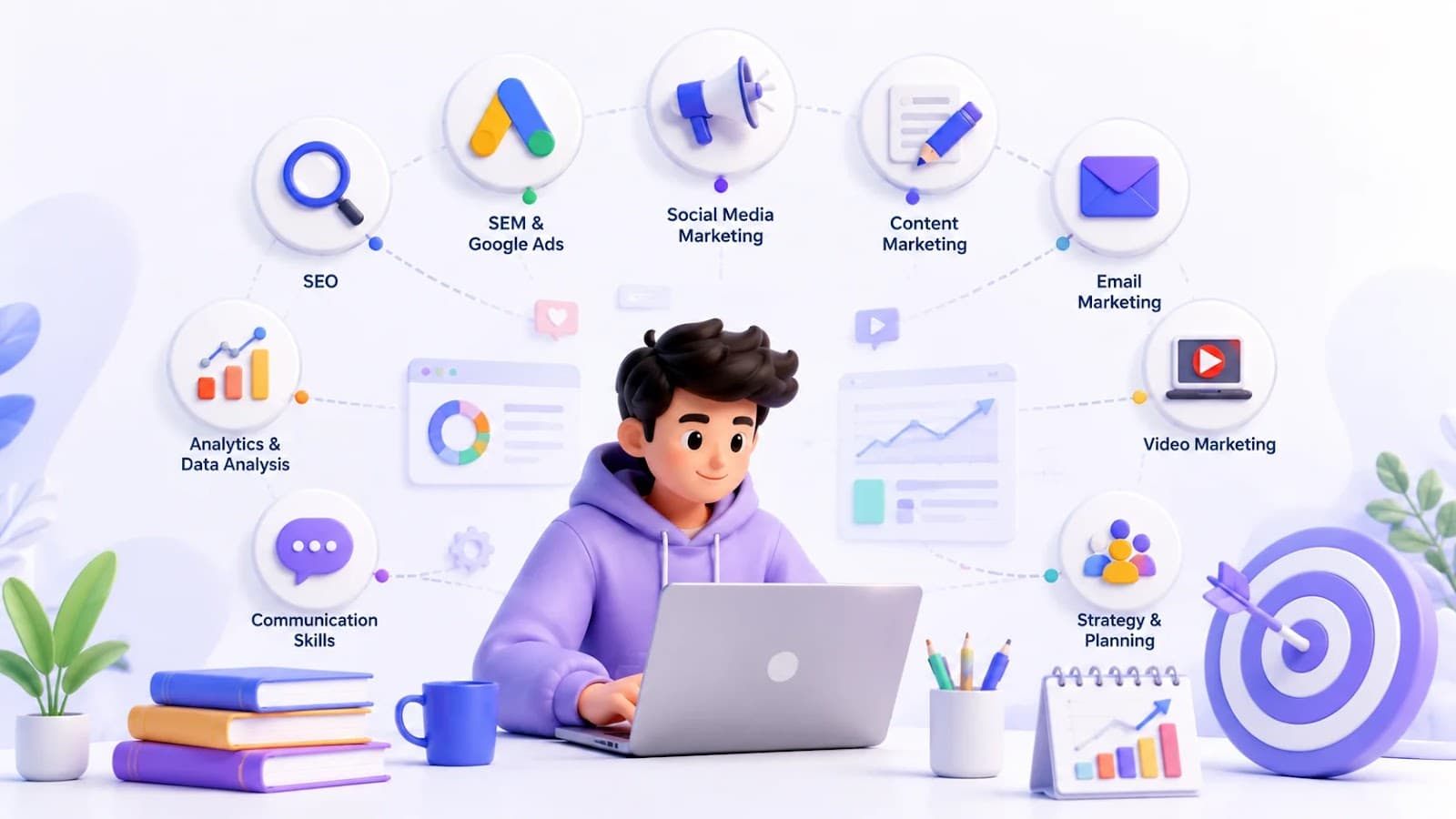
Explore the top 10 Digital Marketing Skills every student should master, from SEO and Google Ads to AI tools, to build a successful Marketing Skills portfolio and career.